Initial Access Entry Paths Most Commonly Abused in Recent Intrusions
Initial access is no longer a single technical event. It is a sequence of trust failures, exposed pathways, and human dependencies that attackers exploit to quietly enter an environment. In recent intrusions, the most damaging outcomes rarely come from exotic exploits or advanced malware. They come from abusing entry paths that organizations already rely on to function.
For CISOs, understanding initial access entry paths is critical because every downstream impact depends on how the attacker got in. The access method determines stealth, speed, privilege, and persistence. It also determines how difficult detection and eviction will be. When defenders misjudge these entry paths, they focus on the wrong controls and respond too late.
This blog examines the initial access entry paths most commonly abused in recent intrusions, why attackers favor them, what defenders often misunderstand, and how to reduce risk without breaking operations.
The shift from exploitation to access abuse
Why attackers no longer need zero days
In many recent incidents, attackers did not exploit vulnerabilities at all. They logged in. Stolen credentials, abused tokens, trusted remote access, and misconfigured identity controls provided faster and quieter access than exploiting software flaws. This shift reflects maturity in attacker tradecraft and realism about defender behavior.
Exploitation creates noise. Credential abuse blends in. Most security environments are designed to detect malware, not misuse of legitimate access. Attackers know that logging in as a trusted user gives them time to explore, persist, and prepare.
How this changes defensive priorities
If initial access is achieved through valid access paths, perimeter security alone is insufficient. The defensive focus must move upstream to identity, access governance, exposure management, and behavior-based detection. The goal is not to block every path, but to make misuse visible and costly.
Entry path one: compromised VPN and secure remote access gateways
Why VPN access remains a prime target
VPNs and secure remote access gateways are designed to provide trusted connectivity into internal networks. They often sit at the edge with broad reach once authenticated. In many intrusions, attackers use stolen credentials or weak MFA implementations to authenticate normally and enter the environment.
VPN access is attractive because it:
- Provides immediate internal network presence
- Often bypasses segmentation controls
- Generates logs that look like normal remote work
- Persists across sessions with minimal effort
Common failure points attackers exploit
Attackers commonly exploit:
- Password reuse and credential stuffing
- MFA fatigue and push abuse
- Legacy authentication still enabled
- Overly permissive VPN routing
- Lack of behavioral monitoring on VPN sessions
Once connected, attackers pivot using standard administrative tools rather than deploying malware.
Why defenders miss VPN-based intrusions
VPN compromise often goes unnoticed because it lacks obvious indicators. There is no exploit alert or suspicious file. The activity looks like a user working remotely. Without monitoring for anomalous login patterns, geography, device posture, or unusual session behavior, attackers can remain undetected for extended periods.
Entry path two: remote desktop protocol and interactive logins
Why RDP continues to appear in intrusions
Remote Desktop Protocol remains one of the most abused entry paths across industries. It is widely deployed, often poorly monitored, and deeply trusted by administrators and operators. RDP provides full interactive access, making it ideal for hands-on-keyboard attacks.
Attackers use RDP to:
- Move laterally after initial credential compromise
- Establish persistence through scheduled tasks and services
- Manually disable security controls
- Stage and execute payloads selectively
How attackers gain RDP access
Access is typically achieved through:
- Reused or shared credentials
- Password spraying against exposed services
- Pivoting from compromised VPN sessions
- Abuse of service accounts with interactive rights
In OT-adjacent environments, RDP is often enabled between IT and operational systems for convenience, creating high-impact entry paths.
Why RDP abuse blends into normal operations
Administrative RDP activity is common. Without strict logging, session recording, and anomaly detection, malicious use is indistinguishable from legitimate support work. This makes RDP one of the most reliable paths for attackers seeking persistence and control.
Entry path three: remote management and monitoring tools
Why RMM tools are a favorite for persistence
Remote management and monitoring tools are designed to provide seamless remote control with minimal friction. Tools like AnyDesk, TeamViewer, ScreenConnect, and similar platforms are trusted by IT teams and often whitelisted across environments.
Attackers abuse RMM tools because they:
- Appear legitimate to security controls
- Survive password resets and account changes
- Enable persistent access from outside the network
- Allow full interactive control without malware
How attackers introduce RMM tools
RMM tools are commonly installed after initial compromise using stolen admin credentials or existing access. In some cases, attackers abuse pre-existing RMM deployments that are poorly governed or shared across customers and sites.
Once installed, the tool becomes a stable backdoor that defenders may overlook during cleanup.
Why organizations underestimate this risk
Because RMM tools are legitimate business software, many organizations lack strict controls around who can deploy them, where they can connect from, and how usage is monitored. This creates a blind spot where attackers can maintain access even during incident response.
Entry path four: cloud identity and token abuse
Why cloud access is an initial access problem
Cloud environments remove the traditional perimeter. Access is controlled by identity, tokens, and session state. In recent intrusions, attackers increasingly target cloud identity platforms because access here provides reach into email, data, virtual machines, and administrative controls.
Cloud identity abuse often involves:
- Phished credentials combined with MFA fatigue
- Stolen session tokens
- OAuth application misuse
- Compromised administrator accounts
How attackers persist without passwords
Tokens and application permissions often survive password resets. Attackers exploit this by creating new OAuth applications, granting excessive permissions, or maintaining active sessions that defenders fail to invalidate.
This allows attackers to retain access even after apparent remediation, leading to repeat compromise.
Why cloud entry paths are overlooked
Many organizations assume that enabling MFA is sufficient. They underinvest in monitoring sign-in behavior, token lifecycle events, and application consent changes. This creates an environment where attackers can operate entirely within the cloud control plane without touching endpoints.
Entry path five: email and collaboration platforms
Why email remains a gateway to access
Email is not just a phishing vector. It is an access platform. Once an attacker compromises an email account, they gain insight into workflows, relationships, and authentication patterns. They can also pivot into other systems using password resets, SSO links, and trusted communications.
Compromised email accounts enable:
- Internal phishing and expansion
- Resetting credentials for other services
- Data exfiltration without malware
- Business email compromise and fraud
How attackers maintain control
Attackers often create inbox rules, forwarding configurations, or delegated access to maintain persistence. These changes are subtle and frequently missed, allowing attackers to monitor communications long-term.
Why email compromise escalates quickly
Because email underpins identity recovery, vendor coordination, and executive communication, compromise here can undermine incident response itself. Attackers can monitor defender actions and adapt in real time.
Entry path six: third-party and vendor remote access
Why vendors are a high-leverage entry path
Third-party access is designed to be trusted and convenient. Vendors often require persistent access for maintenance, support, or monitoring. This access is frequently less monitored than internal access and may not follow the same security standards.
Attackers target vendor access because:
- Vendors may have weaker security controls
- Shared accounts are common
- Access often spans multiple environments
- Activity is assumed to be legitimate
Common vendor access weaknesses
Weaknesses include:
- Shared VPN or remote desktop accounts
- Lack of MFA enforcement
- Always-on access without time limits
- Poor visibility into vendor activity
Once compromised, vendor access can provide a stealthy bridge into sensitive systems, including OT-adjacent environments.
Entry path seven: OT and industrial remote access pathways
Why OT entry paths create outsized impact
OT environments rely heavily on remote access for engineering, monitoring, and support. These paths are often fragile, poorly segmented, and sparsely monitored. Attackers do not need to manipulate controllers to cause disruption. They only need to interfere with visibility and control.
Common OT entry paths include:
- Engineering workstations
- Jump servers bridging IT and OT
- Vendor remote maintenance portals
- Remote HMI access
How attackers exploit OT access
Attackers use valid credentials to access OT-adjacent systems, then disrupt operations by:
- Disabling monitoring systems
- Corrupting configuration data
- Interrupting remote access services
- Forcing manual operations
The result is operational uncertainty rather than physical damage.
Why detection is difficult in OT contexts
OT environments prioritize availability and stability. Security logging is often limited. Changes may go unnoticed until operators experience degraded visibility or control. This gives attackers time to execute disruption with minimal resistance.
Entry path eight: misconfigured internet-facing services
Why exposure management matters
Not all initial access involves credentials. Misconfigured internet-facing services such as management consoles, APIs, and administrative portals continue to provide entry points. Attackers routinely scan for exposed services with weak authentication or default settings.
These entry paths are abused because:
- They are easy to find
- They often lack monitoring
- They provide direct administrative access
Why these issues persist
Asset inventories are often incomplete. Shadow systems, temporary deployments, and forgotten services accumulate over time. Without continuous exposure management, organizations remain vulnerable to opportunistic access.
What defenders consistently get wrong about initial access
Overemphasizing malware
Many defenses focus on detecting malicious files. In recent intrusions, malware is often minimal or absent. The real activity happens through legitimate tools and credentials.
Treating authentication as authorization
Just because a user authenticates successfully does not mean their activity is safe. Behavioral context matters. Attackers exploit this assumption to operate freely once logged in.
Assuming initial access is obvious
Initial access is often subtle. It may look like a single login, a new session, or a small configuration change. Without correlation and context, these signals are easy to miss.
How to reduce risk across entry paths
Strengthen identity and access governance
Phishing-resistant MFA, time-bound privileges, and strict conditional access policies reduce the effectiveness of credential abuse. Monitoring identity events is as important as monitoring endpoints.
Monitor behavior, not just access
Look for anomalies in login timing, geography, device posture, and activity patterns. Legitimate access used maliciously often deviates from normal behavior.
Control remote tools deliberately
Restrict which remote access and RMM tools are allowed. Monitor their deployment and usage closely. Treat new installations as high-risk events.
Segment with purpose
Segmentation should reflect real workflows. Limit how far any single access path can reach. Monitor crossings between zones, especially between IT and OT.
Prepare for recovery
Assume initial access will occur. Invest in recovery readiness, including identity recovery, endpoint rebuilds, and validation of backups under adversarial conditions.
The CISO takeaway
Initial access is no longer about breaking in. It is about walking through trusted doors that were left open for convenience. Attackers succeed by abusing entry paths that defenders consider normal and safe.
Security programs that focus only on prevention miss the reality of modern intrusions. The organizations that respond fastest are those that understand how attackers get in, monitor those paths relentlessly, and are prepared to contain misuse before it becomes disruption.
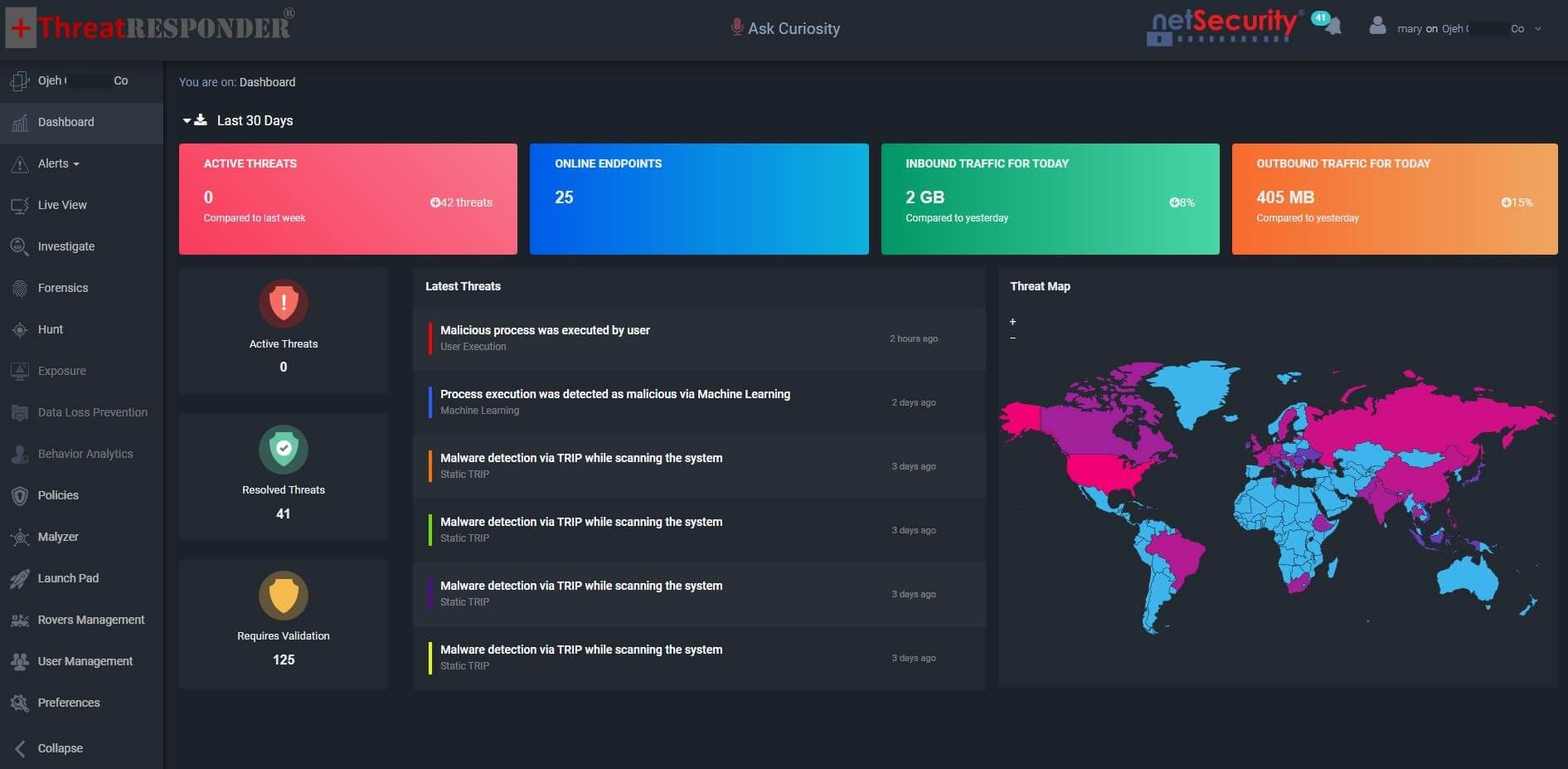
NetSecurity’s ThreatResponder strengthens endpoint security by focusing on the entry paths attackers abuse most. ThreatResponder delivers rapid endpoint triage, identity-aware containment, behavioral threat hunting, and recovery-focused response that helps organizations cut off attacker access quickly, limit lateral movement, and restore trust in endpoints when initial access is detected.
Disclaimer
The page’s content shall be deemed proprietary and privileged information of NETSECURITY CORPORATION. It shall be noted that NETSECURITY CORPORATION copyrights the contents of this page. Any violation/misuse/unauthorized use of this content “as is” or “modified” shall be considered illegal and subjected to articles and provisions that have been stipulated in the General Data Protection Regulation (GDPR) and Personal Data Protection Law (PDPL).