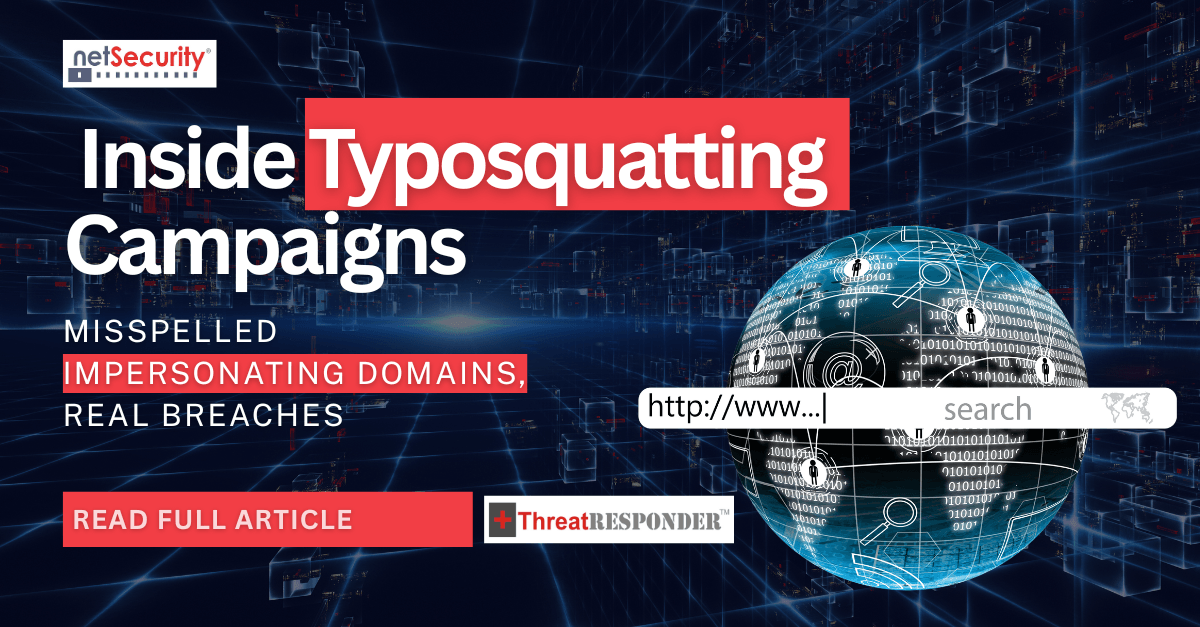
Misspelled Impersonating Domains, Real Breaches: Inside Typosquatting Campaigns
Typosquatting is one of the oldest techniques in the threat actor playbook, yet it remains one of the most effective. Attackers exploit minor spelling mistakes, visual similarity, and human behavior to impersonate trusted brands, internal tools, and business partners. A single misplaced character in a domain name can be enough to redirect traffic, harvest credentials, deliver malware, or initiate a full-scale breach.
Despite years of awareness training and improved email security, typosquatting continues to fuel phishing campaigns, credential theft, malware delivery, and cloud account compromise. The persistence of this technique is not accidental. It works because it targets trust, not technology.
This blog explores how typosquatting campaigns operate today, why they continue to succeed against modern defenses, and what security teams must do to disrupt them before they escalate into real breaches.
Understanding Typosquatting as a Threat Actor Technique
Typosquatting refers to the registration and use of domain names that closely resemble legitimate domains. The resemblance may be based on common typing errors, visual similarity, or subtle changes that are difficult to detect at a glance. Threat actors weaponize these domains to impersonate organizations, services, and individuals.
Attackers do not rely on users noticing the typo. They rely on users trusting the brand. When users see what appears to be a familiar domain, skepticism drops. That moment of trust is all an attacker needs.
Typosquatting should not be viewed as a user mistake. It is a deliberate and engineered attack technique designed to exploit how humans interact with digital systems.
Common Typosquatting Domain Patterns
Typosquatted domains follow patterns that maximize success while minimizing cost and detection. Threat actors carefully choose domain variations based on how users type, read, and interpret URLs.
Character Omission and Duplication
One of the simplest forms of typosquatting involves removing or duplicating a single character from a legitimate domain. These domains often evade quick visual inspection and are highly effective in phishing campaigns.
Character Substitution
Attackers frequently replace characters with visually similar alternatives such as replacing l with I or using zero instead of the letter o. These substitutions are especially effective in domains displayed on mobile devices or within truncated user interfaces.
Adjacent Keyboard Characters
Domains that replace letters with keys located next to each other on a keyboard are common. This technique exploits natural typing errors that users make when entering URLs manually.
Additional Words and Prefixes
Attackers add common terms like secure, login, verify, portal, or support to create credibility. These domains appear legitimate and often pass light scrutiny.
Subdomain Abuse
Rather than registering a full typosquatted domain, attackers may place the misspelling or brand impersonation in a subdomain. This further obscures detection and bypasses simplistic domain filtering.
How Typosquatted Domains Are Weaponized
Typosquatting by itself is only the starting point. The real danger lies in how these domains are operationalized within larger attack campaigns.
Credential Harvesting
The most common use of typosquatted domains is credential harvesting. Attackers clone legitimate login pages and host them on impersonating domains. Victims enter credentials believing they are authentic portals. The stolen credentials are then sold, reused, or weaponized for lateral movement.
This technique is particularly effective against cloud services, VPN portals, SaaS platforms, and enterprise authentication gateways.
Malware Delivery
Typosquatted domains are frequently used to host malware payloads. Victims may be tricked into downloading documents, software updates, invoices, or installers hosted on impersonating domains. Because the domain appears legitimate, users are more likely to bypass security warnings.
Email and Business Impersonation
Email campaigns using typosquatted domains often impersonate vendors, executives, or internal teams. These domains allow attackers to send emails that appear legitimate without triggering traditional spoofing protections like DMARC.
This leads to business email compromise, invoice fraud, payroll redirection, and data exfiltration.
Command and Control Infrastructure
Typosquatted domains are also used as command and control endpoints. By resembling legitimate domains, they blend into normal traffic patterns and evade network monitoring.
Why Typosquatting Continues to Succeed
Typosquatting persists not because defenses do not exist, but because visibility and response gaps remain widespread.
Detection Lag Creates Opportunity
Typosquatted domains are often registered and weaponized within hours. Many organizations rely on periodic domain monitoring or manual review processes that are too slow to respond.
Attackers exploit this delay to launch short-lived but high-impact campaigns before domains are taken down or blocked.
Trust-Based Security Assumptions
Many security controls still assume that trusted brands and domains are safe. Typosquatting attacks succeed by operating just outside those trust boundaries.
Email gateways, web filters, and identity systems may treat these domains as unknown rather than malicious, allowing them to pass initial scrutiny.
User Context Is Incomplete
Security tools struggle to assess intent when a domain looks legitimate and behavior appears normal. A user logging in, downloading a document, or clicking a link from a familiar looking domain does not immediately raise alarms.
Attackers exploit this gap by designing campaigns that appear routine rather than suspicious.
Automation Favors Attackers
Threat actors automate domain registration, certificate issuance, infrastructure setup, and campaign deployment. Defenders often rely on slower and fragmented workflows that cannot keep up with the pace.
Typosquatting as an Initial Access Vector
Modern breaches increasingly begin with identity compromise rather than vulnerability exploitation. Typosquatting plays a critical role in this shift.
A harvested credential provides a clean entry point that bypasses perimeter defenses, endpoint protections, and sometimes even multi factor authentication. From there, attackers can escalate privileges, move laterally, and exfiltrate data while appearing legitimate.
This makes typosquatting a reliable initial access technique in ransomware, espionage, and financially motivated attacks.
Impact on Cloud and SaaS Environments
Typosquatting poses a unique threat to cloud and SaaS environments. These platforms are accessed primarily through web interfaces and rely heavily on user authentication.
Attackers target cloud login portals, identity providers, and collaboration platforms with typosquatted domains. Once credentials are stolen, attackers can operate directly within cloud environments without deploying malware.
This leads to data theft, configuration changes, token abuse, and persistence that is difficult to detect.
Why Traditional Security Controls Fall Short
Many organizations believe they are protected against typosquatting because they deploy email security, DNS filtering, and user training. While these controls help, they are not sufficient on their own.
Email defenses may miss domains that have no prior reputation. DNS filters may not block newly registered domains until abuse is reported. User awareness reduces risk but does not eliminate human error.
Without proactive monitoring and rapid response, typosquatting remains effective.
Shifting from Detection to Preemptive Defense
Defending against typosquatting requires a shift in mindset. Security teams must stop viewing these attacks as isolated phishing events and start treating them as infrastructure threats.
Continuous Domain Monitoring
Organizations should continuously monitor for domains that impersonate their brand, key services, and partners. Visibility must extend beyond exact matches to include variants and visual similarities.
Early Risk Assessment
Newly registered impersonating domains should be assessed immediately. Waiting for user interaction or abuse reports often means waiting too long.
Automated Blocking and Containment
Security teams need the ability to rapidly block domains across email, web, identity, and endpoint controls. Manual processes cannot keep pace with attacker automation.
Identity Response Integration
When typosquatting leads to credential compromise, response must be immediate. Session invalidation, credential rotation, and access review should be triggered automatically.
The Business Impact of Typosquatting Attacks
Typosquatting is not just a technical issue. It has direct business consequences.
Breaches caused by typosquatting lead to operational disruption, financial loss, regulatory exposure, and reputational damage. Customers do not distinguish between a compromise caused by a misspelled domain and one caused by a vulnerability. They see failure.
As attackers continue to exploit brand trust and user behavior, organizations that ignore typosquatting do so at significant risk.
The Path Forward for Security Teams
Typosquatting will not disappear. It remains low cost, low complexity, and high success for attackers. The only sustainable defense is visibility combined with speed.
Security teams must adopt proactive domain intelligence, integrate response across security controls, and treat typosquatting as a first stage breach activity rather than a nuisance.
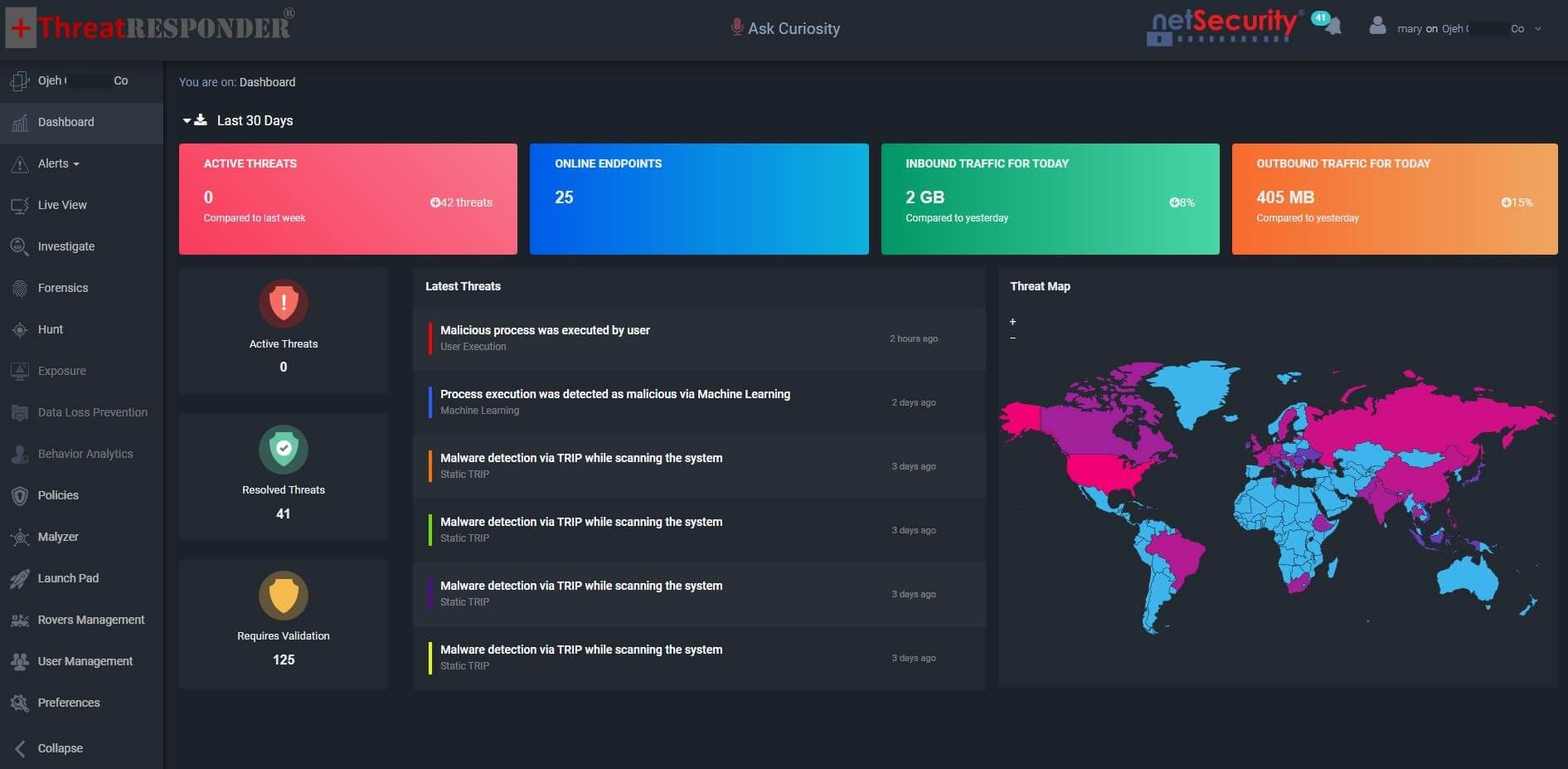
This requires tools and processes designed to disrupt attacks before they escalate. Modern typosquatting campaigns demonstrate how small details can lead to real breaches. Misspelled impersonating domains enable attackers to bypass defenses, steal identities, and compromise environments with alarming efficiency. Typosquatting works because it exploits trust and time. NetSecurity ThreatResponder helps organizations take effective response capabilities.
Disclaimer
The page’s content shall be deemed proprietary and privileged information of NETSECURITY CORPORATION. It shall be noted that NETSECURITY CORPORATION copyrights the contents of this page. Any violation/misuse/unauthorized use of this content “as is” or “modified” shall be considered illegal and subjected to articles and provisions that have been stipulated in the General Data Protection Regulation (GDPR) and Personal Data Protection Law (PDPL).