The Cyber Threats That Will Define 2026
The cybersecurity landscape is entering a decisive phase. As organizations accelerate digital transformation, attackers are evolving their tactics at an equal or faster pace. The threats emerging in 2026 are not entirely new, but they are becoming more automated, more targeted, and far more damaging. Cybercrime has matured into a structured, business-driven ecosystem fueled by artificial intelligence, cloud adoption, geopolitical tension, and operational complexity.
Understanding the cyber threats that will define 2026 is essential for business leaders, security professionals, and technology teams. This blog explores the most impactful threat categories shaping the coming year and explains why traditional security strategies are no longer sufficient.
The Acceleration of Industrialized Cybercrime
Cybercrime is no longer driven by isolated actors or opportunistic attacks. It has adopted industrial principles focused on speed, scalability, and efficiency. In 2026, attackers operate with defined roles, automated tooling, and repeatable processes that resemble legitimate software development and marketing operations.
Criminal groups prioritize attack velocity over novelty. Reconnaissance, exploitation, lateral movement, and monetization occur within hours rather than weeks. Automated scanning tools identify exposed assets continuously, while prebuilt exploitation frameworks enable rapid compromise of vulnerable systems. This operational maturity reduces attacker dwell time and compresses the window defenders have to detect and respond.
The result is a threat environment where the speed of compromise is often faster than human-led response capabilities. Security operations that depend on manual investigation and delayed decision-making are increasingly ineffective against this model.
Artificial Intelligence as a Core Attack Enabler
Artificial intelligence is transforming cybersecurity on both sides of the battlefield, but in 2026, attackers are using AI aggressively to scale offensive capabilities. AI-driven tools enhance nearly every phase of the attack lifecycle, from reconnaissance and social engineering to malware development and data exploitation.
Phishing campaigns are becoming highly personalized and context-aware. Large language models generate emails that mimic executive communication patterns, internal terminology, and business workflows. Deepfake voice and video technologies amplify social engineering by enabling realistic impersonation of trusted individuals.
AI is also used for automated vulnerability discovery and exploit optimization. Attackers can analyze large sets of code, configurations, and system responses to identify weaknesses at machine speed. Malware development benefits from AI-assisted obfuscation, allowing malicious code to evade signature-based detection more effectively.
As AI adoption within enterprises grows, attackers increasingly target AI systems themselves. Prompt injection, data poisoning, and misuse of AI-powered workflows represent a new class of risk that blurs the line between cybersecurity and operational integrity.
The Expanding Ransomware Model
Ransomware remains one of the most dominant cyber threats heading into 2026, but its execution continues to evolve. The modern ransomware operation is no longer defined solely by file encryption. Instead, it integrates data extortion, identity compromise, cloud abuse, and business disruption.
Attackers increasingly steal sensitive data before deploying ransomware or skip encryption entirely. Extortion through data exposure, regulatory pressure, and brand damage has proven just as effective as traditional encryption-based attacks. Ransomware groups are also targeting cloud environments, backup systems, and identity platforms to weaken recovery options and amplify leverage.
Another defining trend is the fragmentation of ransomware ecosystems. Large, well-known brands are being replaced by smaller, decentralized operators who leverage shared tooling and affiliate models. This fragmentation makes attribution more difficult and increases attack volume.
In 2026, ransomware is less about encrypting files and more about controlling identity, access, and business continuity across hybrid environments.
Identity as the Primary Attack Vector
Identity-based attacks are emerging as one of the most critical cybersecurity challenges of 2026. As organizations adopt cloud services, remote work, and software-as-a-service platforms, identity becomes the primary control plane for access and trust.
Attackers prioritize credential theft, token abuse, and session hijacking over traditional malware deployment. Compromised credentials allow attackers to bypass security controls while blending into normal user behavior. Multi-factor authentication fatigue attacks, OAuth abuse, and identity federation weaknesses are commonly exploited techniques.
Once identity is compromised, attackers gain access to critical systems, sensitive data, and privileged workflows without triggering traditional perimeter defenses. The reliance on identity-driven access models makes detection more complex and response more difficult.
Organizations that fail to implement strong identity governance, continuous authentication monitoring, and least privilege access controls face growing risk as identity becomes the new perimeter.
Supply Chain and Third-Party Risk Escalation
Supply chain attacks are becoming one of the most disruptive threat categories defining 2026. Organizations depend on complex ecosystems of vendors, service providers, software libraries, and cloud platforms. Each dependency expands the attack surface.
Attackers exploit third-party access to infiltrate multiple organizations simultaneously. Compromised software updates, malicious code injections, and abused vendor credentials provide highly efficient paths to large-scale compromise. These attacks are particularly damaging because they leverage trusted relationships, making detection difficult and response slow.
Unmonitored edge devices such as VPN appliances, firewalls, routers, and IoT systems are frequently used as initial access points. Many of these systems operate outside standard endpoint security coverage and often remain unpatched for extended periods.
In 2026, visibility into third-party risk and external attack surfaces becomes a mandatory component of any effective security program.
Cloud and SaaS Control Plane Abuse
Cloud adoption continues to accelerate, but cloud security maturity often lags behind deployment speed. In 2026, attackers increasingly target cloud control planes rather than traditional infrastructure.
Misconfigured storage services, overprivileged accounts, exposed APIs, and weak access management provide attackers with persistence and control without deploying malware. Cloud-native attacks are difficult to detect with traditional tools, especially when attackers operate using legitimate credentials.
Software-as-a-service platforms also present high-value targets due to the concentration of sensitive data and business workflows. Email platforms, document storage systems, collaboration tools, and customer relationship management applications are frequent entry points for attackers.
Organizations relying on shared responsibility models without clear ownership of cloud security controls face growing operational and compliance risk as cloud abuse becomes more sophisticated.
Geopolitical Influence on Cyber Threats
Geopolitical tension continues to shape cyber activity in 2026. Nation-state and state-aligned groups increasingly integrate cyber operations into broader political, economic, and military strategies. Critical infrastructure, public services, and strategic industries face heightened risk.
Cyber operations aligned with geopolitical objectives often seek disruption rather than financial gain. Attacks may focus on service outages, data destruction, misinformation campaigns, and psychological impact. These attacks are designed to exploit societal trust and organizational dependencies rather than steal data.
The overlap between criminal and state-sponsored activity further complicates attribution and response. Techniques and tools frequently migrate between groups, making threat origins less clear.
Organizations operating in regulated sectors or providing essential services must recognize cyber risk as a geopolitical factor rather than purely a technical challenge.
The Challenge of Attack Surface Expansion
Digital transformation significantly expands organizational attack surfaces. Remote work, cloud infrastructure, mobile devices, APIs, and shadow IT create countless entry points for attackers. In 2026, attackers exploit complexity as effectively as technical vulnerabilities.
Every exposed service, forgotten asset, or unmanaged system increases risk. Organizations struggle to maintain accurate asset inventories across hybrid environments, allowing attackers to identify and exploit overlooked weaknesses.
Continuous attack surface management becomes a foundational requirement, replacing periodic assessments that fail to reflect real-time exposure. Without clear visibility, security teams remain reactive and overwhelmed by alerts rather than proactive and strategic.
The Need for Unified and Intelligent Security Operations
The cyber threats defining 2026 share a common characteristic. They operate across multiple domains simultaneously. Network, endpoint, cloud, identity, and users are no longer separate security silos. Attacks flow seamlessly across these environments using automation and legitimate access paths.
Security operations that remain fragmented struggle to detect complex attack chains. Alert fatigue, manual investigation, and disconnected tools slow response and increase the potential for business impact. The demand for automation, orchestration, and contextual intelligence continues to rise.
Security teams must move toward unified platforms that correlate telemetry across environments, prioritize risk, and support rapid decision-making. Human expertise remains essential, but it must be augmented with intelligent systems designed for speed and scale.
Preparing for the Cyber Reality of 2026
Preparing for the cyber threats of 2026 requires a shift in mindset. Prevention remains important, but resilience and response capability are equally critical. Organizations must assume breaches will occur and focus on minimizing dwell time, limiting impact, and recovering quickly.
Key priorities include strengthening identity security, improving visibility across cloud and endpoint environments, reducing attack surface exposure, and addressing third-party risk. Security strategies must align with business objectives and operational realities.
Investment in people, process, and technology must be balanced. Training, governance, and collaboration across teams are just as important as advanced tools and platforms.
Concluding with NetSecurity ThreatResponder
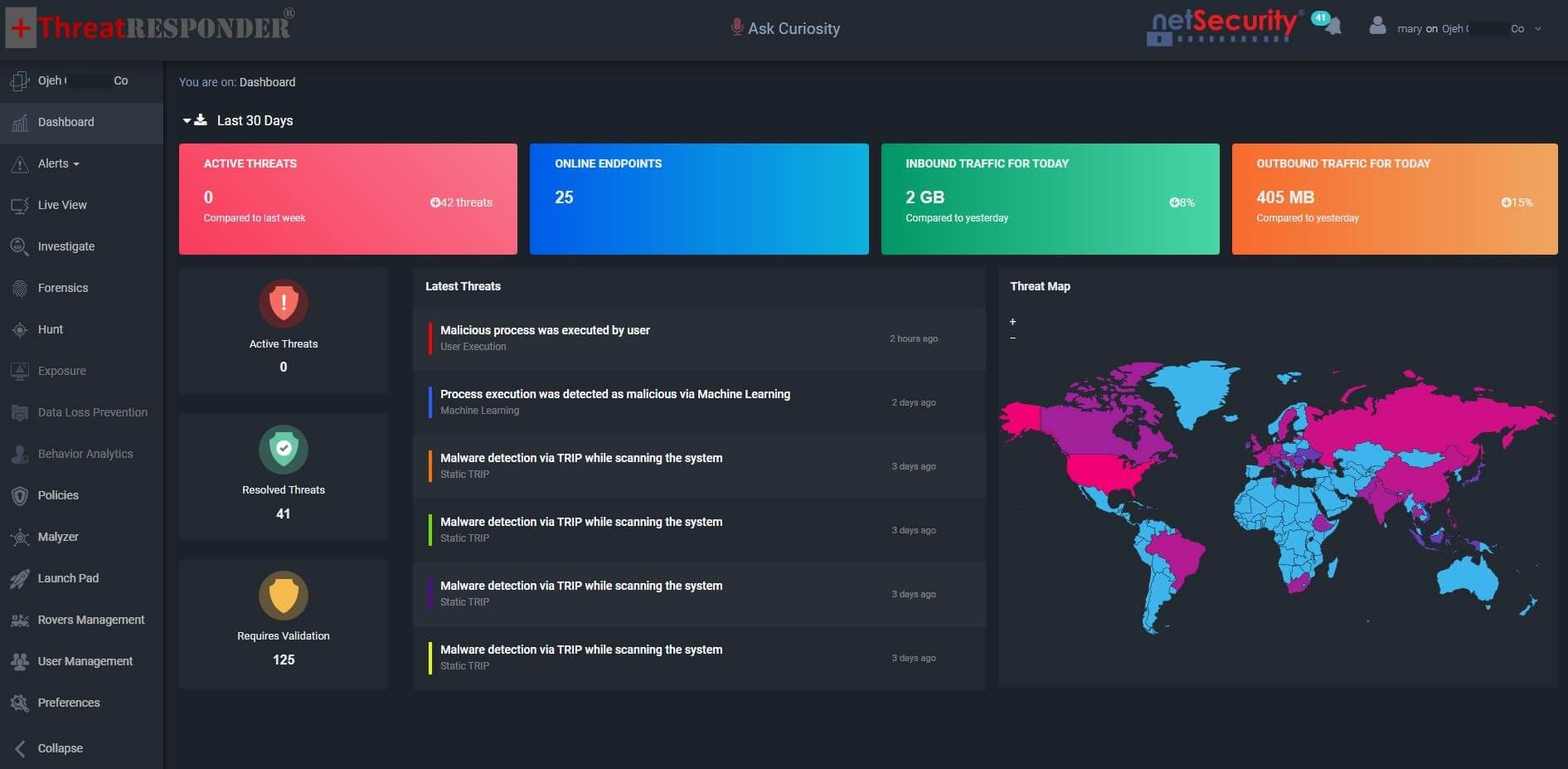
As cyber threats become faster, more automated, and more interconnected, organizations need a security operations platform built for this reality. NetSecurity ThreatResponder is designed to help organizations navigate the challenges defining 2026 by unifying detection, investigation, and response across modern environments.
ThreatResponder empowers security teams with centralized visibility, intelligent threat correlation, and streamlined workflows that reduce response time and operational complexity. By bringing together threat intelligence, automation, and expert-driven insights, ThreatResponder enables organizations to move from reactive defense to proactive security operations.
In a year defined by accelerated cyber risk, NetSecurity ThreatResponder provides the clarity, control, and confidence organizations need to stay ahead of evolving threats.
Disclaimer
The page’s content shall be deemed proprietary and privileged information of NETSECURITY CORPORATION. It shall be noted that NETSECURITY CORPORATION copyrights the contents of this page. Any violation/misuse/unauthorized use of this content “as is” or “modified” shall be considered illegal and subjected to articles and provisions that have been stipulated in the General Data Protection Regulation (GDPR) and Personal Data Protection Law (PDPL).