Wiper Attacks in 2026: The Return of Destructive Cyber Operations
Wiper attacks exist to destroy, not to extort. Unlike ransomware that encrypts files and holds them for payment, wipers overwrite data, corrupt system structures, and disable recovery paths to ensure organizations cannot restore normal operations. In 2026 these destructive campaigns have reemerged as a preferred option during geopolitical flashpoints and as retaliation in hybrid conflicts. Modern wipers target more than files. They disrupt identity systems, hypervisors, storage arrays, and cloud control planes to maximize downtime and cost.
Core objectives of wiper campaigns
- Irreversible data destruction that forces rebuilds instead of restores
- Operational paralysis through simultaneous detonation across many systems
- Psychological shock that undermines trust in technology and continuity plans
- Strategic signaling during geopolitical tensions to exert pressure without kinetic force
How modern wipers work in 2026
Attackers no longer rely on a single destructive binary. Wiper operations are coordinated sequences that strike the weakest links across identity, endpoints, servers, and cloud resources to prevent recovery and to prolong disruption.
Common technical methods
- File overwrite using random or null data patterns to defeat file carving
- Master boot record and partition table tampering that bricks devices on reboot
- Snapshot and backup deletion followed by destruction of backup indexes
- Hypervisor and VM metadata corruption to render many workloads inoperable at once
- Cloud storage lifecycle manipulation that expires or deletes critical objects
- Destructive scripts packaged as legitimate administrative tasks to blend in
Why recovery is harder now
Enterprises rely on distributed IT. Backups reside on disk, in snapshots, and in cloud tiers. Identity and access management is centralized and integrated with SaaS. A modern wiper campaign aims to corrupt these trust anchors first, then detonates on production. By the time the incident is recognized, backup catalogs are missing, credentials to recovery systems are revoked or changed, and the organization must rebuild identity, inventory, and configuration before data restoration can even begin.
The 2026 wiper attack lifecycle
Mapping the lifecycle helps teams insert controls that make a difference before detonation.
Stage 1: Initial access
Attackers acquire a foothold through stolen credentials, phishing, vulnerable edge appliances, or supplier compromise. Increasingly the first step is identity abuse because legitimate sessions avoid early alerts. An unmonitored service account or a legacy VPN account can be enough to begin staging.
Stage 2: Privilege escalation and discovery
Once inside, adversaries escalate privileges using over-permissioned roles, domain trusts, misconfigurations in cloud IAM, or unprotected secrets in CI pipelines. They map the environment, inventory backup platforms, locate hypervisors, identify storage controllers, and enumerate disaster recovery runbooks in documentation portals.
Stage 3: Backup and visibility suppression
Before any destructive action, attackers sabotage recovery. They delete snapshots, rotate or remove backup encryption keys, alter retention policies, disable immutability, and corrupt catalogs. They also tamper with logging and monitoring by modifying agents, changing forwarders, or muting high value alerts.
Stage 4: Coordinated detonation
The destructive payload is launched in bursts that target hypervisors, domain controllers, critical app servers, and shared storage. In cloud environments, scripts may purge storage objects, revoke access policies, and terminate instances, all while disabling automation that would normally repopulate infrastructure.
Stage 5: Persistence and re-attack potential
Some wiper campaigns include persistence that survives reimaging. Hidden accounts, rogue OAuth grants, scheduled tasks in orchestration platforms, and shadow infrastructure remain to trigger repeat waves if the victim recovers too quickly.
Why wiper attacks are resurging
Wiper attacks rise with geopolitical tension, but there are operational reasons too. They are fast, scalable, and increasingly automated. They escalate pressure by inflicting business pain without the complexity of negotiation. They can be combined with extortion first data theft to maximize leverage. They also exploit the overconfidence many organizations have in backups that are connected, accessible, and insufficiently governed.
Four drivers behind the trend
- Identity centralization has created single points of catastrophic failure
- Backup platforms are online, scriptable, and too often administered with shared credentials
- Cloud control planes allow rapid changes to storage and policy with a few API calls
- Adversary automation makes synchronized, multi target detonation feasible at scale
The real impact on business
Wiper attacks create costs that far exceed typical ransomware incidents. Beyond downtime, there are rebuild expenses, hardware replacement, data loss, regulatory implications, and long term reputational damage. Because wipers destroy forensic evidence, investigations can be more complex, delaying insurance claims and board reporting. The mean time to recover often stretches from days to weeks, particularly when identity and configuration states must be recreated before data can be restored.
Hidden costs security leaders should expect
- Manual reconstitution of identity directories and conditional access policies
- Rebuilding infrastructure as code repositories and deployment pipelines
- Revalidating data integrity for partially restored systems
- Extended outage of downstream partners and suppliers dependent on your services
- Legal and compliance exposure from lost audit trails and tampered logs
High value targets and sectors at risk
Any organization with centralized identity, shared storage, and cloud connected backups can be a target, but certain environments are especially exposed in 2026.
Sectors with elevated risk
- Government and public sector where disruption has strategic impact
- Energy, utilities, and manufacturing with operational technology dependencies
- Healthcare and pharmaceuticals where availability and integrity are life critical
- Financial services where data loss undermines trust and regulatory standing
- Media and telecommunications where outages have immediate societal effects
Common wiper precursors and detection signals
Wiper campaigns leave faint signals prior to detonation. SOC teams that tune for these patterns can interrupt the lifecycle before destruction.
Identity and access signals
- Creation of new global admin accounts or elevation of service principals
- Unusual OAuth grants with broad storage or mailbox scopes
- Suspicious authenticator changes and break glass account activity
- Access to backup consoles from unfamiliar devices or locations
Backup and storage signals
- Snapshot mass deletion or retention policy changes outside change windows
- Backup encryption key rotation or export without approved tickets
- New network paths or credentials used to access storage controllers
- Spikes in object deletion events or bucket lifecycle edits in cloud storage
Hypervisor and orchestration signals
- Unplanned VM metadata edits, datastore unmounts, or hypervisor management traffic at odd hours
- New or modified automation runbooks that can stop clusters or wipe volumes
- Agent disablement or uninstall events on hosts that anchor many workloads
Defensive strategy for wiper attacks in 2026
Defense must assume attempted destruction and focus on blast radius reduction, rapid detection of precursors, and fast, structured recovery. Traditional perimeter controls are not enough. Identity, backup governance, and cloud controls are central.
Strengthen identity against destructive misuse
- Enforce least privilege with just in time access for all administrative roles
- Require step up verification for access to backup, hypervisor, and cloud storage consoles
- Segregate duties so no single identity can alter backups and production simultaneously
- Monitor authenticator lifecycles, high risk OAuth scopes, and break glass usage in real time
Make backups genuinely resilient
- Implement immutability with write once read many storage and offline copies
- Protect backup admin access behind dedicated identity and network boundaries
- Test catalog recovery and key material restoration separate from the primary backup system
- Alert on any change to retention, encryption keys, snapshot schedules, and replication paths
Harden hypervisors and storage
- Isolate management networks and require privileged access workstations
- Implement multi party approvals for datastore deletes, host evacuations, and cluster reconfigs
- Monitor for agent tampering, hypervisor API abuse, and configuration drift
- Keep golden images for rapid redeployment of hypervisor hosts and controllers
Secure the cloud control plane
- Apply service control policies that prevent destructive actions without emergency approvals
- Enforce object lock and versioning for critical buckets and repositories
- Use separate accounts or subscriptions for backup, logging, and production workloads
- Continuously validate that infrastructure as code definitions match deployed reality
Prepare to operate without complete logs
- Preserve out of band logging pipelines to a tenant or region not managed by the same admins
- Snapshot configuration states for identity, network, and cloud policy daily
- Maintain offline copies of incident response runbooks and key contact lists
- Prestage legal templates and board updates for destructive attacks
Incident response playbook for wiper detonation
A wiper attack requires a different rhythm than a typical intrusion because many tools and records you rely on may be gone. Practice this playbook and refine it quarterly.
Immediate containment steps
- Suspend suspected admin accounts and revoke active sessions and tokens
- Sever management connectivity to hypervisors and storage until identities are verified
- Block destructive API calls with emergency guardrails at cloud provider level
- Disable risky OAuth grants and rotate secrets associated with orchestration tools
Stabilization and scoping
- Build a hand curated asset list from CMDB, network maps, and procurement records
- Validate the integrity of remaining logs and establish trusted time windows
- Identify which backups and snapshots are intact, where they are stored, and who can access them
- Verify the status of identity infrastructure and decide whether to rebuild or recover
Recovery planning
- Restore identity first with known good artifacts and minimal privileges
- Rebuild core platforms such as DNS, DHCP, and certificate services from golden images
- Prioritize business critical applications using dependency maps
- Restore data to quarantined networks and validate integrity with application owners
- Enforce enhanced monitoring on recovered systems for re-attack attempts
Stay Protected with ThreatResponder
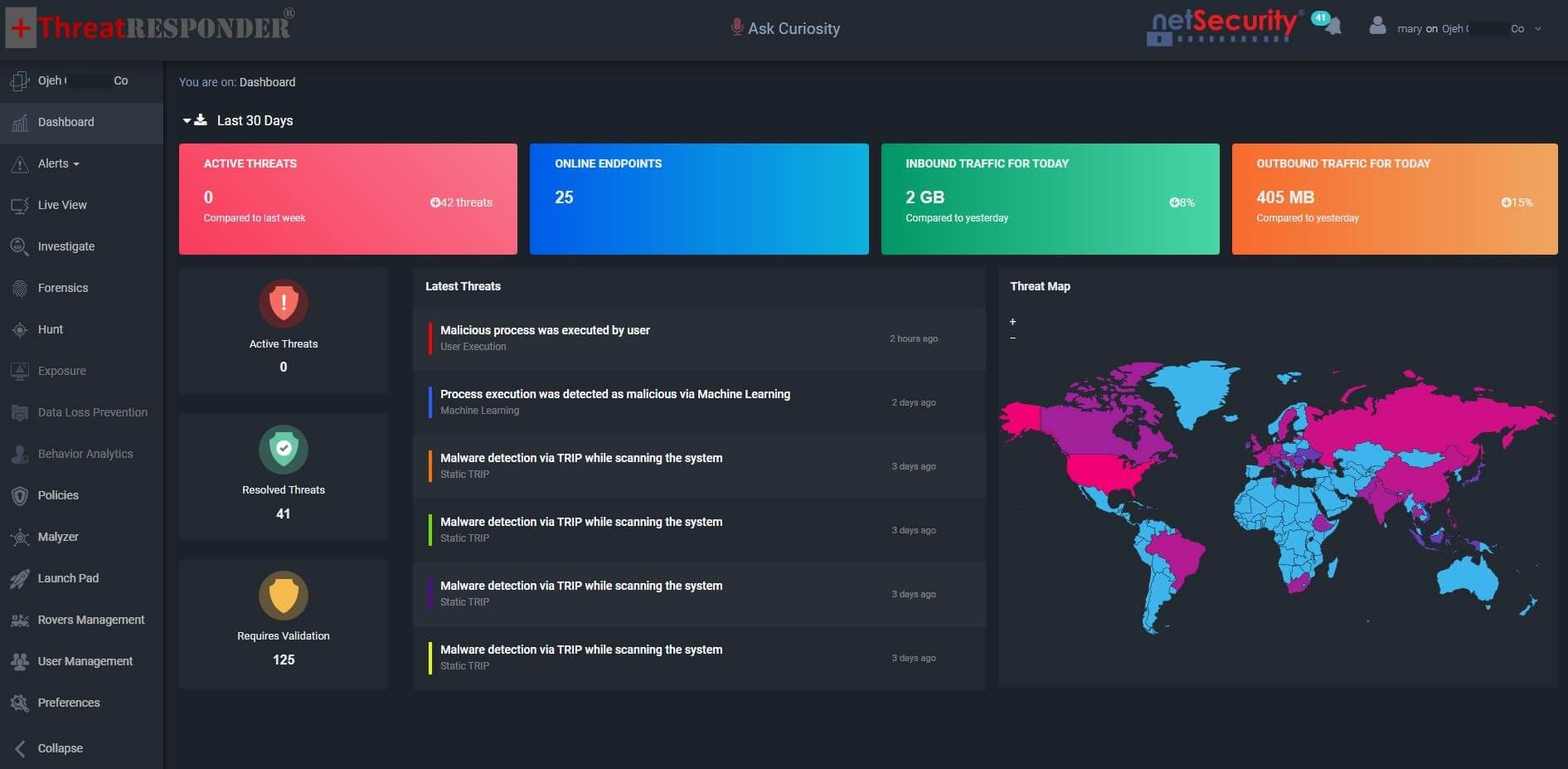
ThreatResponder identifies advanced cyber threats in real time by correlating identity activity, endpoint incidents, and telemetry into a single, unified view. Instead of relying on isolated alerts, it surfaces attack sequences as they unfold, allowing security teams to see destructive activity forming before impact occurs.
By detecting early indicators such as privilege misuse, backup tampering, risky OAuth grants, policy changes, and suspicious administrative sessions, ThreatResponder enables rapid, targeted response. Security teams can revoke sessions, disable malicious access paths, enforce step‑up authentication, and contain threats quickly without disrupting normal business operations.
In an era where attacks are automated, coordinated, and destructive by design, ThreatResponder gives organizations the speed, visibility, and control needed to stop threats before recovery options are destroyed.
Disclaimer
The page’s content shall be deemed proprietary and privileged information of NETSECURITY CORPORATION. It shall be noted that NETSECURITY CORPORATION copyrights the contents of this page. Any violation/misuse/unauthorized use of this content “as is” or “modified” shall be considered illegal and subjected to articles and provisions that have been stipulated in the General Data Protection Regulation (GDPR) and Personal Data Protection Law (PDPL).