Understanding BRICKSTORM: A Sophisticated Backdoor Threat Targeting VMware and Windows Environments
Executive Summary of the Threat
BRICKSTORM is not a typical piece of malware. It is a Go-based ELF backdoor engineered for VMware vSphere environments, specifically targeting VMware vCenter servers and ESXi hosts, as well as Windows systems. The primary objective of BRICKSTORM is to establish long-term persistence, enabling attackers to maintain covert access to compromised networks for extended periods. This persistence facilitates credential theft, data exfiltration, and stealthy command-and-control (C2) operations.
Victim organizations identified in the report primarily belong to Government Services and Facilities and the Information Technology sectors, highlighting the adversary’s focus on critical infrastructure and sensitive environments.
Technical Capabilities and Attack Techniques
BRICKSTORM demonstrates a high level of sophistication through its design and operational features:
- Persistence Mechanisms: The malware modifies VMware initialization scripts and employs self-monitoring logic to ensure durability. It also checks environment variables to evade detection.
- Command-and-Control (C2) Obfuscation: BRICKSTORM uses DNS-over-HTTPS, nested TLS encryption, and WebSocket protocols to blend malicious traffic with legitimate HTTPS activity. This makes network-based detection significantly more challenging.
- Virtualization Exploitation: Attackers leverage access to VMware vCenter to steal cloned virtual machine snapshots, enabling credential extraction. They also create hidden rogue VMs, which can serve as covert footholds for future operations.
- Lateral Movement and Privilege Escalation: Techniques observed include the use of web shells on DMZ servers, Remote Desktop Protocol (RDP) with valid credentials, and collection of sensitive files such as NTDS.dit from domain controllers.
- Additional Features: BRICKSTORM includes SOCKS proxy functionality for lateral movement and full file-system manipulation capabilities. Some variants even employ VSOCK-based communication, optimized for virtualized environments.
Implications for Critical Infrastructure
The deployment of BRICKSTORM by PRC state-sponsored actors signals a strategic intent to compromise high-value targets and maintain operational persistence. By exploiting virtualization platforms—cornerstones of modern IT infrastructure—attackers gain unparalleled access to sensitive systems and data. This capability poses severe risks, including:
- Credential Compromise: Extracting credentials from VM snapshots can lead to domain-wide breaches.
- Data Exfiltration: Persistent access enables long-term espionage and theft of intellectual property.
- Operational Disruption: Rogue VMs and covert backdoors can serve as launch points for destructive attacks.
Organizations operating in government, defense, and critical infrastructure sectors must treat this advisory as a high-priority alert.
Indicators of Compromise and Detection
The advisory provides Indicators of Compromise (IOCs) and detection signatures, including YARA and Sigma rules, to assist defenders in identifying BRICKSTORM infections. These resources are critical for organizations conducting threat hunting and forensic analysis. Security teams should immediately integrate these detection rules into their monitoring systems and SIEM platforms.
For detailed IOCs and detection signatures, CISA has made downloadable resources available through its official channels. See: https://www.cisa.gov/sites/default/files/2025-12/MAR-251165.c1.v1.CLEAR_stix2.json and https://www.cisa.gov/sites/default/files/2025-12/CMA_SIGMA_251157_r2_BRICKSTORM_Activity_TLP_CLEAR_1.yaml
Recommended Mitigation Strategies
CISA, NSA, and Cyber Centre strongly recommend the following actions:
- Apply Detection Rules: Implement YARA and Sigma rules provided in the advisory to identify BRICKSTORM-related activity.
- Monitor Virtualization Platforms: Regularly audit VMware vSphere environments for unauthorized changes, rogue VMs, and suspicious snapshots.
- Enhance Network Monitoring: Deploy advanced network security tools capable of detecting encrypted C2 channels, including DNS-over-HTTPS anomalies.
- Credential Hygiene: Rotate privileged credentials frequently and enforce multi-factor authentication (MFA) across all administrative accounts.
- Incident Reporting: If BRICKSTORM or related activity is detected, report immediately to CISA or relevant national authorities for coordinated response.
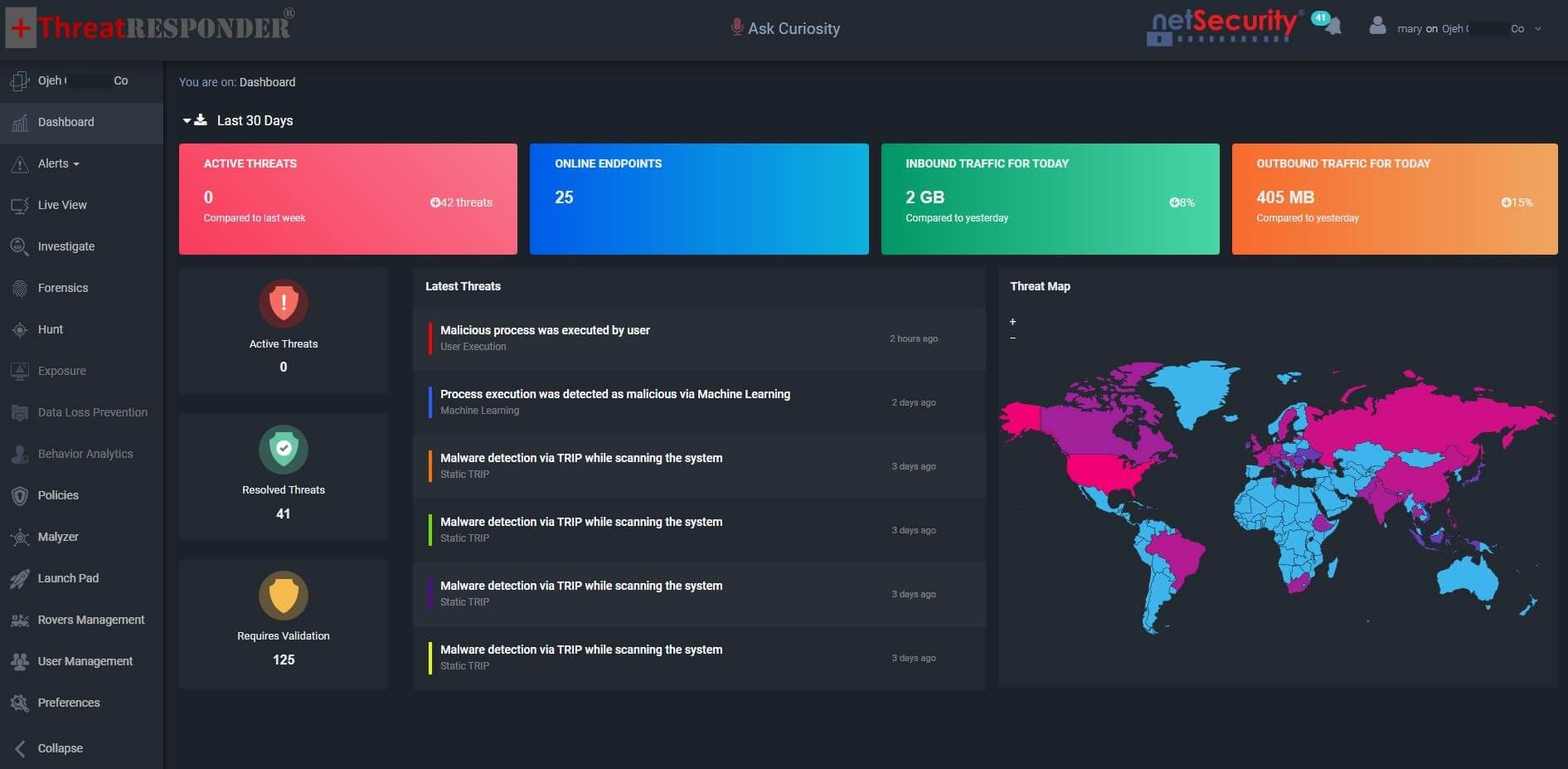
ThreatResponder – All-in-One Platform To Prevent Advanced Cyber Attacks
LockBit 5.0 ransomware represents a pragmatic but potent step forward: memory‑resident loading and ETW suppression on Windows, CLI‑driven precision on Linux, and hypervisor‑level disruption on ESXi. Its cross‑platform design compresses defender response time and challenges assumptions about in‑fabric resilience.
That’s where NetSecurity’s ThreatResponder changes the game. Unlike point solutions, ThreatResponder delivers an all-in-one platform that combines:
- EDR + ITDR — to detect endpoint and identity threats, including credential abuse that often follows perimeter compromises.
- Threat Hunting & Forensics — enabling security teams to investigate post-exploitation activity and uncover stealthy ransomware behaviors.
- Integrated Vulnerability Management — giving CISOs visibility into exposed assets and missing patches before attackers exploit them.
- Threat Intelligence Feeds — enriched with global insights on adversary tactics, techniques, and procedures used by cybercrime groups.
With ThreatResponder, organizations gain unified visibility, proactive detection, and automated response to stop advanced ransomware attacks before they cause damage.