Session Hijacking Is the New MFA Bypass: Why Authentication No Longer Equals Security
For years, security strategy revolved around one moment in time: authentication. If a user passed MFA, the assumption was that access was trustworthy. In 2026, that assumption is one of the most dangerous gaps in enterprise security. Attackers are no longer focused on defeating MFA directly. They are targeting what happens after MFA succeeds. Session hijacking has become the preferred technique for identity driven breaches because it allows attackers to inherit trust without triggering authentication controls. Once a valid session is stolen, MFA is irrelevant.
Authentication verifies identity at a single point. Sessions represent ongoing trust. Attackers now operate in that gap.
What session hijacking actually is
Session hijacking occurs when an attacker takes control of a valid, already authenticated session instead of trying to log in themselves. Every modern application issues session tokens, cookies, or bearer tokens after successful authentication. These artifacts tell systems that the user has already been verified. If an attacker steals them, the attacker becomes the user.
Why sessions are valuable targets
Sessions allow attackers to:
- Bypass login screens entirely
- Avoid MFA challenges
- Inherit trusted device status
- Operate quietly within normal user workflows
- Move across SaaS, cloud, and internal applications using SSO
From a detection perspective, session hijacking is difficult because there is no obvious authentication failure. Everything looks legitimate.
Why MFA does not protect the session layer
MFA is highly effective at preventing unauthorized logins. It does not protect what happens after login.
MFA is a gate, not a guard
Once a session is established, MFA typically steps aside. Unless step up authentication is enforced for sensitive actions, the session continues uninterrupted. Attackers know this and focus on stealing session artifacts rather than credentials.
Trusted sessions reduce friction and increase risk
To improve usability, organizations allow longer session lifetimes, remembered devices, and persistent login states. These features increase productivity but also extend the window during which a stolen session can be abused.
MFA bypass does not require breaking MFA
Session hijacking does not defeat MFA. It avoids it. That distinction matters because many organizations measure MFA success by reduced credential theft while ignoring session abuse entirely.
How attackers steal sessions in the real world
Session hijacking techniques have matured alongside identity defenses. Attackers combine multiple methods depending on the target environment.
Infostealer malware
Infostealers infect endpoints and extract browser cookies, authentication tokens, saved credentials, and session data. Once collected, these artifacts are sold or used directly to access corporate systems. Because the session is already authenticated, access often succeeds immediately.
Browser extensions and injected scripts
Malicious or compromised browser extensions can access session storage and cookies. In environments where extensions are loosely controlled, attackers can silently siphon session data without triggering endpoint alerts.
Adversary in the middle phishing
Advanced phishing frameworks proxy real login pages in real time. Users authenticate to the legitimate service, complete MFA, and receive a valid session. The proxy captures the session token and hands the user off to the real site, leaving the victim unaware while the attacker reuses the session elsewhere.
Compromised shared or unmanaged devices
Shared workstations, jump boxes, and unmanaged personal devices are frequent session leakage points. When multiple users authenticate on the same device, session isolation becomes weaker and attribution becomes harder.
Why session hijacking is hard for SOC teams to detect
Session hijacking thrives in the blind spots of traditional security monitoring.
Successful authentication is treated as benign
Most detection logic focuses on failed logins, brute force, and MFA challenges. A successful login is often assumed to be safe. Session hijacking flips this assumption on its head.
Identity telemetry is fragmented
Session activity spans identity providers, browsers, endpoints, SaaS platforms, and cloud services. Without correlation across these layers, analysts see isolated events rather than an attack narrative.
Behavior looks normal in isolation
Attackers using stolen sessions perform actions that the legitimate user is authorized to do. Accessing files, sending emails, and browsing dashboards rarely look suspicious when viewed individually.
Alerts fire too late
Many organizations detect compromise only after data exfiltration, privilege escalation, or ransomware deployment. By then, the session hijacking phase is long over.
How session hijacking fits into modern attack chains
Session hijacking is rarely the end goal. It is the acceleration mechanism that turns a foothold into full compromise.
Stage 1: Initial access
Attackers obtain a session through malware, phishing, or device compromise. No password cracking or MFA bypass is required.
Stage 2: Privilege discovery
With a valid session, attackers enumerate permissions, groups, and accessible applications. They identify opportunities for escalation.
Stage 3: Persistence
Attackers create OAuth grants, register applications, generate API tokens, or add additional authenticators. This ensures access persists even if the original session expires.
Stage 4: Lateral movement
Using SSO and shared trust, attackers pivot across SaaS platforms, cloud consoles, and internal tools. Identity becomes the transport layer for the breach.
Stage 5: Impact
Data is exfiltrated quietly, backups are sabotaged, ransomware is deployed, or destructive actions are prepared. The original session theft is rarely visible in post incident timelines.
Why session hijacking is increasing in 2026
Several trends have made session hijacking more attractive and more effective.
Identity is centralized
Single sign on means one session can unlock dozens of applications. The payoff for stealing a session has never been higher.
SaaS adoption expanded the attack surface
Modern enterprises rely on browsers as the primary interface to sensitive data. The browser has become the new endpoint blind spot.
Automation favors attackers
Attackers automate session harvesting, validation, and reuse. They test sessions rapidly and discard those that fail, focusing only on those that grant access.
Human behavior remains predictable
Users trust familiar login flows, approve MFA prompts reflexively, and install productivity extensions without scrutiny. Attackers exploit these habits at scale.
Detection strategies that actually work
Defending against session hijacking requires moving beyond authentication based security and embracing continuous identity monitoring.
Monitor sessions, not just logins
Track session creation, reuse, and anomalies. Watch for sessions accessed from new devices, unusual locations, or inconsistent client fingerprints.
Correlate identity with endpoint and SaaS behavior
A session that suddenly triggers mass downloads, unusual API calls, or first time access to sensitive systems should be investigated immediately.
Baseline normal behavior
Understand what normal looks like for users, roles, and applications. Session hijacking often reveals itself through subtle deviations rather than blatant violations.
Treat post login actions as risk signals
Privilege elevation, OAuth consent, application registration, and backup access are high risk actions that should trigger additional verification or alerts.
Response actions for suspected session hijacking
Speed matters. Once a session is hijacked, containment must happen quickly to prevent escalation.
Revoke sessions and tokens
Terminate all active sessions associated with the identity and invalidate refresh tokens. Do not rely on password resets alone.
Enforce step up authentication
Require reauthentication for sensitive actions after containment to ensure the legitimate user regains control safely.
Investigate persistence mechanisms
Look for OAuth grants, service principals, API keys, and added authenticators that may outlive the stolen session.
Contain devices if needed
If session theft is linked to endpoint compromise, isolate the device and perform forensic analysis before restoring access.
Common myths that leave organizations exposed
Misconceptions about identity security continue to fuel session hijacking success.
Myth 1: MFA means the account is safe
Truth: MFA protects login, not the session.
Myth 2: Session attacks are rare
Truth: Session hijacking is now one of the most common techniques used in identity driven breaches.
Myth 3: Endpoint security will catch session theft
Truth: Many session hijacking techniques operate entirely within legitimate browser processes.
Myth 4: Identity attacks are easy to spot
Truth: Identity attacks are subtle, contextual, and require correlation across systems to detect early.
Building a resilient identity security program
Organizations must evolve their identity strategy to reflect how attackers actually operate.
Make identity continuous
Security decisions should be evaluated throughout the session lifecycle, not just at login.
Reduce session lifetime risk
Shorten session durations for sensitive applications and require reauthentication for high impact actions.
Lock down OAuth and third party access
Restrict user consent, audit grants continuously, and remove unused integrations.
Invest in identity focused detection and response
Treat identity telemetry as first class security data with dedicated analytics and response playbooks.
What CISOs should measure
Metrics drive behavior. Measure what reflects real risk.
Key identity metrics
- Time to detect suspicious session behavior
- Time to revoke compromised sessions
- Percentage of sensitive actions requiring step up authentication
- Coverage of OAuth grant monitoring
- Reduction in standing privileged sessions
How NetSecurity’s ThreatResponder stops session hijacking
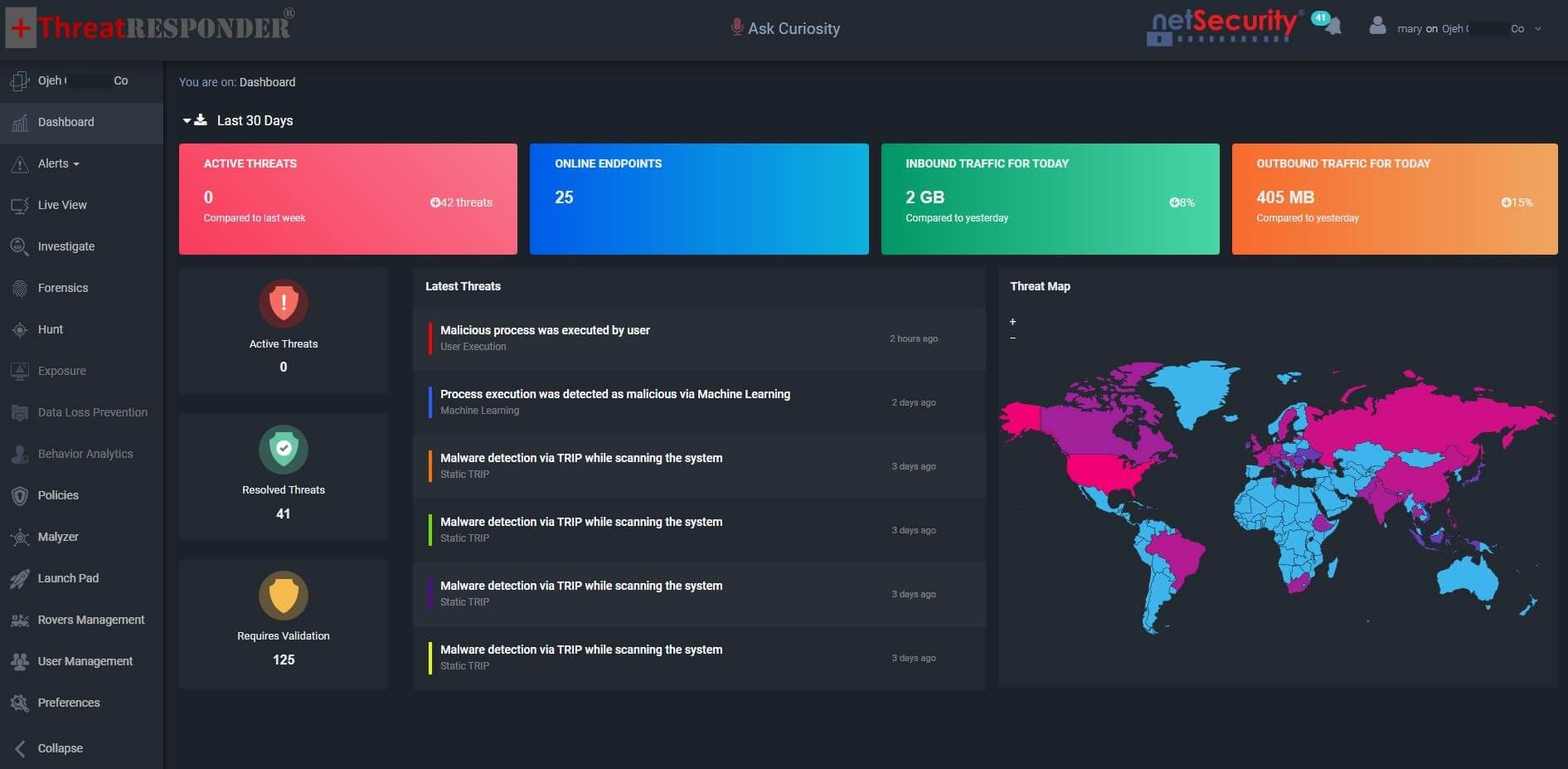
Session hijacking succeeds when identity activity is trusted by default and monitored in isolation. NetSecurity’s ThreatResponder changes that model by identifying threats in real time through continuous correlation of identity events, session activity, endpoint behavior, cloud control plane actions, and SaaS telemetry.
The ITDR module in ThreatResponder is designed specifically to address post authentication attacks. It surfaces suspicious session patterns, token anomalies, OAuth abuse, and privilege escalation sequences as they unfold. When risk is detected, ThreatResponder enables fast, targeted response including session revocation, token invalidation, access rollback, and step up authentication without disrupting normal business operations.
In a world where attackers no longer need to defeat MFA to compromise accounts, authentication no longer equals security. ThreatResponder helps organizations regain control by defending identity continuously, not just at login.
Disclaimer
The page’s content shall be deemed proprietary and privileged information of NETSECURITY CORPORATION. It shall be noted that NETSECURITY CORPORATION copyrights the contents of this page. Any violation/misuse/unauthorized use of this content “as is” or “modified” shall be considered illegal and subjected to articles and provisions that have been stipulated in the General Data Protection Regulation (GDPR) and Personal Data Protection Law (PDPL).