Security Beyond MFA: Why It Is No Longer the Finish Line for Identity Security
Multi factor authentication earned its reputation for dramatically reducing account takeover risk. It adds a second check that a user is who they claim to be, and for many organizations it stopped a large portion of commodity credential attacks. But in 2026, attackers rarely try to break MFA head on. They go around it. They hijack sessions after login. They abuse OAuth grants and consent flows. They compromise trusted devices. They tamper with identity systems. They exploit recovery paths and helpdesk overrides. In other words, they treat MFA as the starting line, not the finish line. If your identity security strategy assumes that passing MFA equals safety, you are defending yesterday’s problems and leaving today’s gaps wide open.
The mindset shift security leaders must make
It is time to stop thinking of MFA as a binary gate that flips risk from high to low. Authentication is a moment. Risk is continuous. The question is not only “did the user pass MFA” but “what is this identity doing right now, with which privileges, on which device, and does the sequence of actions match intent.” That requires identity centric visibility, behavior analytics, and response at the session and token level, not only at the login page.
How attackers bypass the MFA comfort zone
Attack techniques evolve faster than checkbox security. Most modern compromises use valid sessions, not stolen passwords. Understanding how attackers work around MFA helps your team place defenses where they matter.
Session hijacking after successful MFA
When a user authenticates, the platform issues tokens or cookies to maintain the session. Attackers who steal these artifacts inherit the session and skip the login challenge entirely. Infostealer malware, malicious browser extensions, and adversary in the middle phishing proxies capture session tokens and cookie values transparently. Once a session is stolen, traditional login based detections remain quiet because nothing looks wrong at the authentication boundary. The attacker appears as a legitimate user continuing a session.
MFA fatigue and prompt manipulation
Push based MFA methods can be socially engineered. Attackers trigger repeated login attempts to flood users with prompts. Under pressure or confusion, some users click approve. Social engineering adds urgency, spoofed IT helpdesk calls, and contextual details to increase success rates. The lesson is not that MFA is useless, but that human factors can undermine approaches that rely on user judgment under stress.
OAuth consent abuse and app based persistence
Modern SaaS ecosystems rely on OAuth to connect applications. Users can grant third party apps access to mail, files, calendars, and data using delegated scopes. Attackers abuse this by tricking users into consenting to malicious apps or by registering apps in their own tenants and persuading targets to authorize them. Because the grant lives beyond the initial login and may not require admin approval in permissive tenants, this creates durable access that persists through password resets and sometimes even through authenticator changes. The login was strong. The grant was the back door.
Recovery flows and helpdesk overrides
Organizations still need fallbacks for account recovery, break glass access, and device loss. Attackers exploit weak recovery verification, social engineer helpdesks to add new authenticators, or leverage legacy exceptions that bypass strong MFA. A single unreviewed override can silently expand an attacker’s access.
Trusted device and remembered session abuse
Many MFA deployments allow longer lived sessions on trusted devices. If an endpoint is compromised, the attacker gains durable access with fewer prompts and less scrutiny. Without device posture checks and session monitoring, this risk often goes unnoticed.
Where identity security must evolve beyond MFA
The modern identity strategy is built on the idea that authentication is one control among many. To make identity resilient you must treat it as a continuous security surface, not a one time check.
Monitor behavior after login, not just at the gate
Authentication success should trigger scrutiny, not relaxation. Focus detection on what an identity does after a session begins. Look for first time access to sensitive apps, unusual combinations of actions, sudden privilege changes, mass downloads, off hours activity spikes, and connections from unmanaged or atypical devices. Create baselines for users, roles, service accounts, and teams to spot deviations that matter.
Correlate identity with endpoint, cloud, and SaaS context
Identity data alone rarely tells the full story. Tie identity events to endpoint processes, cloud control plane changes, and SaaS content actions. A new OAuth grant followed by large volume API reads and then unexpected external sharing is a stronger signal than any one event by itself. Investigations become faster and more accurate when analysts see identity activity in the context of what changed across the environment.
Treat tokens as first class security assets
Sessions and tokens are the real currency of access. Implement controls that bind tokens to device context where supported, limit token lifetimes for high value applications, and require step up verification for sensitive operations even inside an established session. Monitor for token replay across geographies or device fingerprints and be prepared to revoke tokens at scale quickly when compromise is suspected.
Govern OAuth and third party app access with precision
Move from allow by default to allow by design. Disable user consent for high risk scopes. Create a vetted allowlist of enterprise apps. Require admin approval with business justification for broad scopes like mail read or drive read. Continuously inventory grants and service principals, tag owners, and expire unused access. Alert on new high privilege grants and on dormant apps that suddenly become active.
Reduce standing privileges and adopt just in time access
Persistent admin roles magnify the blast radius of identity compromise. Remove standing privileges wherever possible and replace them with just in time elevation that expires automatically. Require step up verification and approvals for role activation. Record elevated sessions and enforce tighter controls on high risk actions such as policy edits, backup changes, or data export.
Strengthen recovery and exception paths
Any pathway that adds or swaps authenticators should require strong verification and dual control. Helpdesk tools need least privilege and clear guardrails. Break glass accounts should be strictly limited, heavily monitored, tested in controlled exercises, and rotated regularly. Every recovery event should produce a ticket, a second approval, and a follow up review.
Identity attack scenarios security teams must anticipate
Security programs become actionable when they plan for realistic threats. These scenarios reflect how attackers bypass the MFA finish line and what controls stop them.
Scenario 1: The stolen session on a trusted device
A user with phishing resistant MFA logs in from a managed laptop. Infostealer malware on the device extracts tokens. The attacker replays the session from a similar fingerprint and begins accessing sensitive data.
Defensive moves that help:
- Bind tokens to device context and shorten token lifetimes for sensitive apps
- Require step up verification for data export and privilege changes
- Monitor for access from new device fingerprints within a supposedly persistent session
- Quarantine device and revoke all active sessions when high risk signals appear
Scenario 2: The quiet OAuth grant
A marketing employee authorizes an analytics tool that requests overly broad scopes. The app silently reads mailboxes and shared drive content for weeks, trickling data to an external tenant.
Defensive moves that help:
- Restrict user consent and require admin approval for broad scopes
- Inventory and risk rank all grants and service principals with owners and expiry
- Detect grants followed by unusual API reads and new external destinations
- Revoke suspicious grants quickly and notify data owners for review
Scenario 3: The helpdesk assisted authenticator swap
A caller convinces the helpdesk that a device was lost and requests a new authenticator enrollment. Without dual control the change is approved. The attacker now registers a fresh authenticator and operates from an unmanaged device.
Defensive moves that help:
- Require two person approval for authenticator changes on protected accounts
- Enforce device attestation for new authenticators and block unmanaged device access for sensitive apps
- Alert on authenticator changes followed by first time access from new devices
- Provide helpdesk scripts that verify identity using multiple independent factors
Scenario 4: Privilege escalation through identity drift
A compromised non privileged account slowly accumulates access by joining groups, getting added to projects, and obtaining temporary approvals that are never revoked. Weeks later the identity can modify policies and export sensitive data without tripping legacy alerts.
Defensive moves that help:
- Enforce least privilege with periodic reattestation of group and role membership
- Detect unusual sequences like group additions followed by policy edits
- Use just in time elevation with auto expiry to avoid privilege creep
- Monitor for new admin role activations outside expected change windows
Common myths that hold programs back
MFA is essential, but false assumptions about it create blind spots that modern attackers exploit.
Myth 1: Passing MFA means the session is trustworthy
Truth: Attackers target the session itself. Trust must be validated continuously based on behavior, device posture, and context.
Myth 2: Only admin accounts matter
Truth: Most intrusions start with low privilege identities that escalate over time. Early detection focuses on unusual behavior, not job titles.
Myth 3: OAuth is safe by default
Truth: Default tenant settings often allow risky user consent. Without allowlists, scope restrictions, and continuous monitoring, OAuth becomes a stealthy persistence mechanism.
Myth 4: SSO centralizes security, so risk is lower
Truth: Centralization concentrates risk. When identity is the control plane, compromise there can span cloud, SaaS, and on premises in minutes.
Building the right operational model for identity security
Tools matter, but process and culture determine whether identity security works in real time. The following practices help teams move from reactive alerting to proactive control.
Unify telemetry and investigations
Analysts need a single place to view identity events, endpoint signals, cloud changes, and SaaS activity. Fragmented consoles slow investigations and leave gaps. Build a unified investigation surface that stitches events into timelines with clear entity relationships and risk annotations.
Focus detections on sequences, not isolated anomalies
A single odd login is rarely actionable. A chain of authenticator change, new OAuth grant, unusual API reads, and off hours data movement is. Design detections that look for meaningful sequences across domains. This approach reduces noise while capturing sophisticated identity abuse.
Automate safe, reversible response
Identity compromises demand speed. Pre approve targeted actions such as revoking tokens, disabling risky grants, enforcing step up verification on the fly, and temporarily blocking high risk sessions. Build guardrails, require lightweight approvals where needed, and ensure every action is auditable and reversible.
Measure what matters to the business
Track metrics that reflect identity resilience, not just login success. Time to detect suspicious identity activity after successful authentication. Time to revoke malicious grants. Percentage of privileged roles using just in time access. Coverage of high risk apps behind step up verification. Reduction in standing privileges. These numbers demonstrate real progress to executives and the board.
How NetSecurity’s ThreatResponder ITDR Closes the Identity Gap
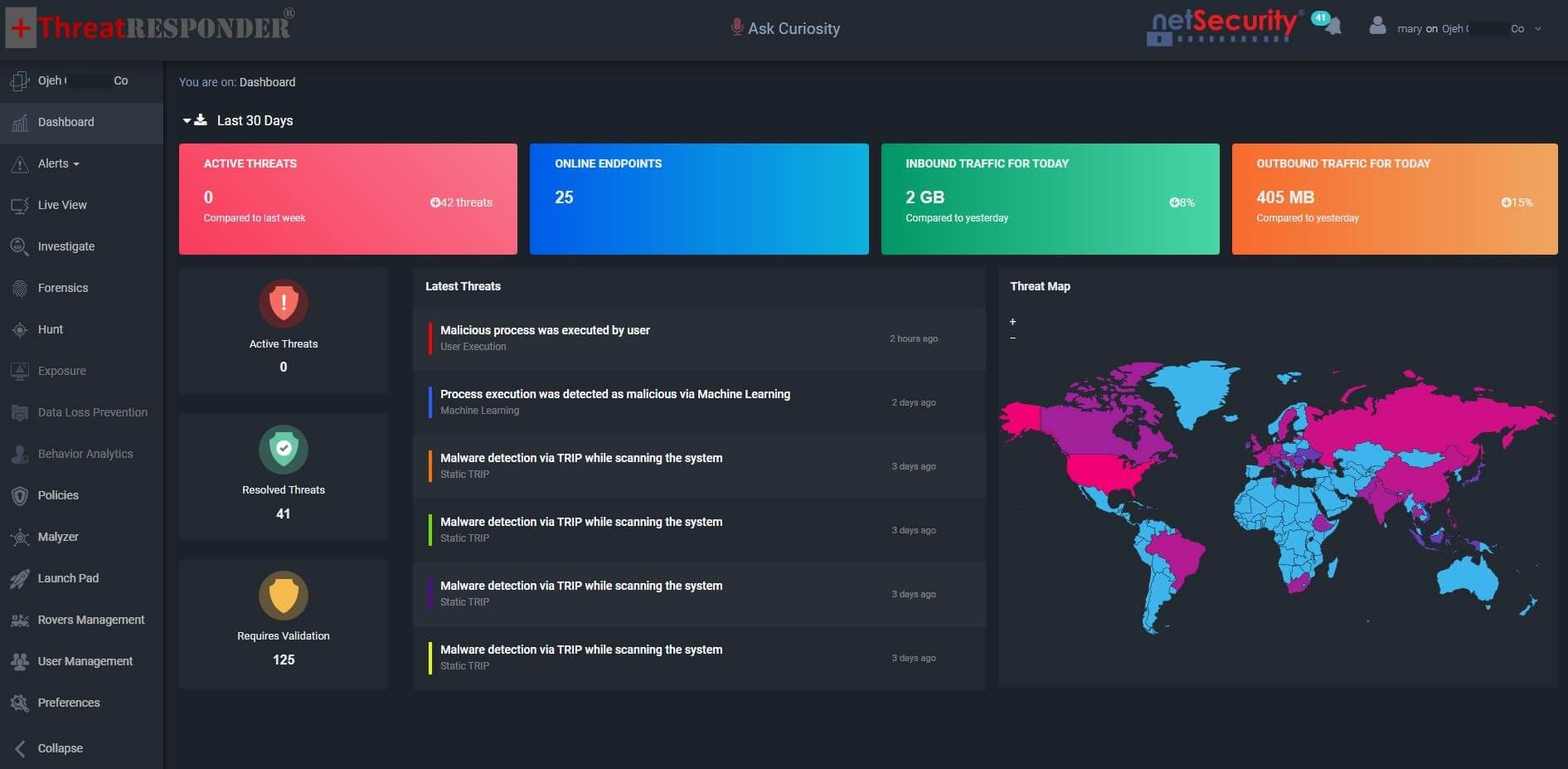
The ITDR module in ThreatResponder is designed specifically to address modern identity‑driven attacks that bypass traditional authentication controls. Rather than treating identity as a one‑time checkpoint at login, ThreatResponder continuously monitors how identities behave after authentication across endpoints, cloud platforms, and SaaS applications.
By correlating session activity, authentication changes, OAuth grants, token usage, and privilege escalation in real time, ThreatResponder exposes attack sequences that would otherwise blend into normal user behavior. This allows security teams to identify session hijacking, MFA bypass, consent abuse, and silent privilege drift as they occur, not after damage is done.
When suspicious identity activity is detected, ThreatResponder enables fast, targeted response. Security teams can revoke active sessions, invalidate tokens, disable risky OAuth grants, roll back unauthorized access changes, and enforce step‑up verification without disrupting legitimate users. Every action is auditable, controlled, and reversible.
In a threat landscape where attackers are no longer breaking in but logging in, ThreatResponder ITDR transforms identity from a single point of failure into a continuously defended control plane.
Disclaimer
The page’s content shall be deemed proprietary and privileged information of NETSECURITY CORPORATION. It shall be noted that NETSECURITY CORPORATION copyrights the contents of this page. Any violation/misuse/unauthorized use of this content “as is” or “modified” shall be considered illegal and subjected to articles and provisions that have been stipulated in the General Data Protection Regulation (GDPR) and Personal Data Protection Law (PDPL).