
Living Off the SaaS: The Newest Evasion Technique No One Is Watching
Enterprises have embraced software as a service for agility, cost efficiency, and collaboration at scale. Email, chat, document management, CRM, HRIS, ERP, developer platforms, analytics suites, and identity providers all live in the cloud and update continuously. This shift has created an unintended advantage for adversaries. Attackers no longer need to drop obvious malware or probe perimeter defenses to achieve their goals. They can live off the SaaS by abusing built in features, app to app connections, user granted OAuth scopes, workflow automations, and native export capabilities. This approach blends attacker activity with legitimate business operations and creates blind spots for teams that still focus primarily on endpoints and networks.
What living off the SaaS means in practice
Living off the SaaS is the cloud era counterpart to living off the land on endpoints. Instead of PowerShell, WMI, and native system tools, attackers rely on SaaS native features and APIs. They operate within permitted identities, consented apps, and collaboration flows. They do not need to introduce foreign binaries or trigger signature based detections. Their actions are API calls and user level events that look like productivity.
Common patterns of SaaS native abuse
- OAuth consent as persistence. A user grants a third party app broad scopes to read mail, files, or contacts. The grant persists after password resets and can outlive the employee.
- App to app pivoting. A compromised identity in one SaaS authorizes another SaaS integration which then becomes a bridge for data movement or privilege escalation.
- Automation hijacking. Built in workflow engines send data to external webhooks, create forwarding rules, or mirror files to personal storage through rule misconfigurations.
- Quiet data exfiltration. Legitimate export features and sync clients move sensitive data to attacker controlled tenants in small, low noise increments.
- Shadow admin paths. Service principals and API keys obtain elevated privileges through overlooked role assignments and outdated policies.
Why most organizations are not watching this layer
Security visibility in SaaS is fragmented. Logs are spread across admin consoles, audit APIs, identity providers, and vendor specific telemetry that often arrives with delays, inconsistent fields, or short retention. Traditional SIEM and EDR stacks are great at operating system events and network traces, but they do not automatically stitch together SaaS identity activity, grants, and content movements into coherent stories. Many teams assume their identity provider and email security cover most of the gap, but modern threats ride on API tokens, delegated scopes, filesharing, and automation that bypasses classical filters.
The culture gap between IT and security
SaaS ownership is often split across business units who prize speed and usability. Security teams become advisors rather than policy authorities. As a result, app enablement outruns risk review. Default sharing settings, generous scopes, and wide marketplace access become the norm because they help productivity. Attackers rely on those defaults.
The attacker playbook for living off the SaaS
Understanding the end to end sequence helps you place controls where they matter.
Step 1: Establish a foothold through identity
Attackers start with a compromised identity via phishing, token theft, OAuth phish, or session hijacking. Low privilege access is enough. The goal is to look like a regular user and avoid noisy sign in failures. Once inside, they review recent emails, chats, documents, and calendars to learn terminology, projects, and team structures for credible next steps.
Step 2: Create durable access with OAuth or app registration
The attacker registers a new application or persuades the user to consent to an existing one. The app requests scopes that align with the target data, like read all mail, read drive files, or manage calendars. Because the grant is user authorized, it can persist through password changes and does not require admin credentials if tenant policy allows user consent. In some tenants the attacker instead registers a service principal and seeks admin approval through social engineering or misrouted change tickets.
Step 3: Enumerate content and permissions through APIs
With the foothold and delegated scopes, the attacker uses APIs to enumerate files, mailboxes, shared drives, repositories, chat channels, and group memberships. Enumeration through APIs is low impact and produces no endpoint telemetry. It resembles productivity tooling like reporting or sync utilities.
Step 4: Move laterally via collaboration links and group scopes
Living off the SaaS favors soft privilege edges. Shared links from one team lead to another, project groups grant opportunities to access partner repositories, and cross tenant sharing bridges to external organizations. Attackers follow these trust lines without triggering privilege elevation logs.
Step 5: Exfiltrate in a trickle
Rather than massive downloads that trigger DLP, attackers export small batches, sync selected folders to an external tenant, or forward categorized mail to an attacker mailbox using rules. They blend exfiltration with normal workflows and vary timing to avoid spikes.
Step 6: Clean traces through policy edits and lifecycle blind spots
Attackers reduce detection opportunities by creating inbox rules that hide warnings, disabling certain alerts where their identity has permissions, or using app accounts that have shorter audit retention. They maintain access through multiple grants so that if one is revoked, another persists.
Where traditional detection fails
Most SOCs are optimized for malware, command and control, and lateral movement on endpoints. SaaS misuse breaks those assumptions.
Identity success looks benign
A successful login with a familiar device and location does not trigger escalations. After that moment, almost every action is an allowed action. Without correlation across identity, app grants, and content actions, the SOC sees nothing urgent.
API activity does not look like exfiltration
APIs are expected to read data. Automated tools and integrations do it constantly. Threshold based alerts struggle when business patterns vary widely by team and season.
Admin controls are decentralized
A collaboration admin can authorize changes that security does not see for hours or days. App marketplaces and custom integrations multiply the pathways.
The critical controls enterprises need now
You can close the SaaS blind spot by addressing identity governance, consent boundaries, behavior analytics, and response design.
Govern OAuth consent with precision
- Disable open user consent for high risk scopes like read all mail, files, or contacts.
- Establish an allowlist for preapproved third party apps.
- Require admin approval workflows with business owner justification for elevated scopes.
- Rotate and revalidate all grants every quarter.
- Tag and track service principals with owners, expiration, and intended purpose.
Enforce least privilege in SaaS roles
- Collapse sprawling admin roles into task based, just in time privileges.
- Require step up authentication for policy changes, sharing setting edits, and tenant wide actions.
- Audit external sharing policies across workspaces and enforce expiration on public links.
- Apply separation of duties for app registration, consent approval, and policy administration.
Baseline and monitor SaaS behavior
- Model normal access patterns for users, service principals, and teams.
- Track first time access to sensitive workspaces and sudden growth in file or message reads.
- Detect automation events that route data to unfamiliar webhooks or storage.
- Watch for grant activity coupled with unusual API calls.
- Monitor rule creation for mail forwarding, document mirroring, or mass permission changes.
Build content aware defenses
- Inventory sensitive repositories and label data consistently.
- Apply conditional access that requires step up verification for exporting or sharing sensitive content externally.
- Use quarantines for suspicious shares and require owner reapproval.
- Inspect egress destinations, including third party SaaS tenants, for risk.
Tighten device and session security
- Bind sessions to device posture and revoke tokens upon posture change.
- Shorten refresh token lifetimes for high value SaaS and require reauthentication for sensitive actions.
- Restrict unmanaged devices to limited web sessions with download controls.
- Prohibit personal sync clients for corporate content.
Realistic scenarios to prepare for
Align tabletop exercises and controls to scenarios that reflect how attackers actually live off the SaaS.
Scenario A: The quiet grant
A sales manager consents to a productivity app that requests broad mail and drive permissions. Over weeks the app exports customer proposals and deal reviews to an attacker controlled tenant at low volume.
Key signals to watch
- New grant with high risk scopes by a non admin user.
- API reads that surge after hours with a new app identity.
- External egress to a previously unseen tenant domain.
Response actions - Revoke grant and tokens, notify owner, and search for similar grants.
- Place impacted files under temporary quarantine and review sharing.
Scenario B: The automation pivot
An attacker with access to a project workspace edits an internal workflow to send copies of uploaded documents to an external webhook. Everything appears to function normally for the team.
Key signals to watch
- Automation edits by identities that rarely change workflows.
- New destinations for data flows and increased webhook traffic.
- Content duplication to non standard endpoints.
Response actions - Disable the automation, block the destination, and review prior runs.
- Require approval for automation changes in high value workspaces.
Scenario C: The marketplace trap
A third party SaaS application in the marketplace gains a surge of installs after a well timed marketing campaign. The app has permissive scopes and begins collecting more data than necessary under the guise of analytics.
Key signals to watch
- Rapid growth in app installs with broad scopes.
- Cross team access by the same app identity.
- Data access with no corresponding business tickets or owners.
Response actions - Suspend app enterprise wide pending security review.
- Replace with a vetted alternative and communicate lessons learned.
How to operationalize living off the SaaS detection in the SOC
Detection is only useful if analysts can act quickly with confidence. Operationalization requires unified telemetry, narrative building, and identity aware response.
Unify identity, grant, and content telemetry
Pull audit logs, grant inventories, session events, and content actions into a single investigation surface. Normalize fields like principals, scopes, resource IDs, and destinations. Without this unification, analysts will chase console to console pivots and lose time.
Move from alert lists to attack narratives
Chain signals by subject. For example, link a new OAuth grant to subsequent API reads and then to external sharing. Present analysts with a story that answers who, what data, which app, and where it went.
Prebuild SaaS specific response playbooks
Analysts should be able to revoke a grant, disable a service principal, quarantine shares, force reauthentication, and notify owners in clicks. Playbooks should include approvals, audit logs, and rollback options to reduce business disruption.
Measure outcomes that matter
Track time to revoke malicious grants, time to quarantine suspicious shares, percentage of high risk scopes under admin control, and rate of third party app reviews completed. Report these metrics to leadership monthly.
A 60 day action plan to start closing the gap
- Days 1 to 10. Inventory all OAuth grants and service principals. Identify top scopes by sensitivity and disable user consent for high risk scopes.
- Days 11 to 20. Implement admin approval workflows with business owner sign off. Build an allowlist of vetted apps and migrate users where necessary.
- Days 21 to 30. Onboard audit logs from your top five SaaS platforms into a central lake. Normalize identities and resource IDs.
- Days 31 to 45. Deploy detections for new grants with sensitive scopes, first time access to restricted workspaces, and mail forwarding or automation rule creation.
- Days 46 to 60. Pilot identity aware response playbooks that revoke grants, quarantine shares, and force reauth. Run a tabletop on the quiet grant scenario.
How ThreatResponder helps you monitor and stop living off the SaaS
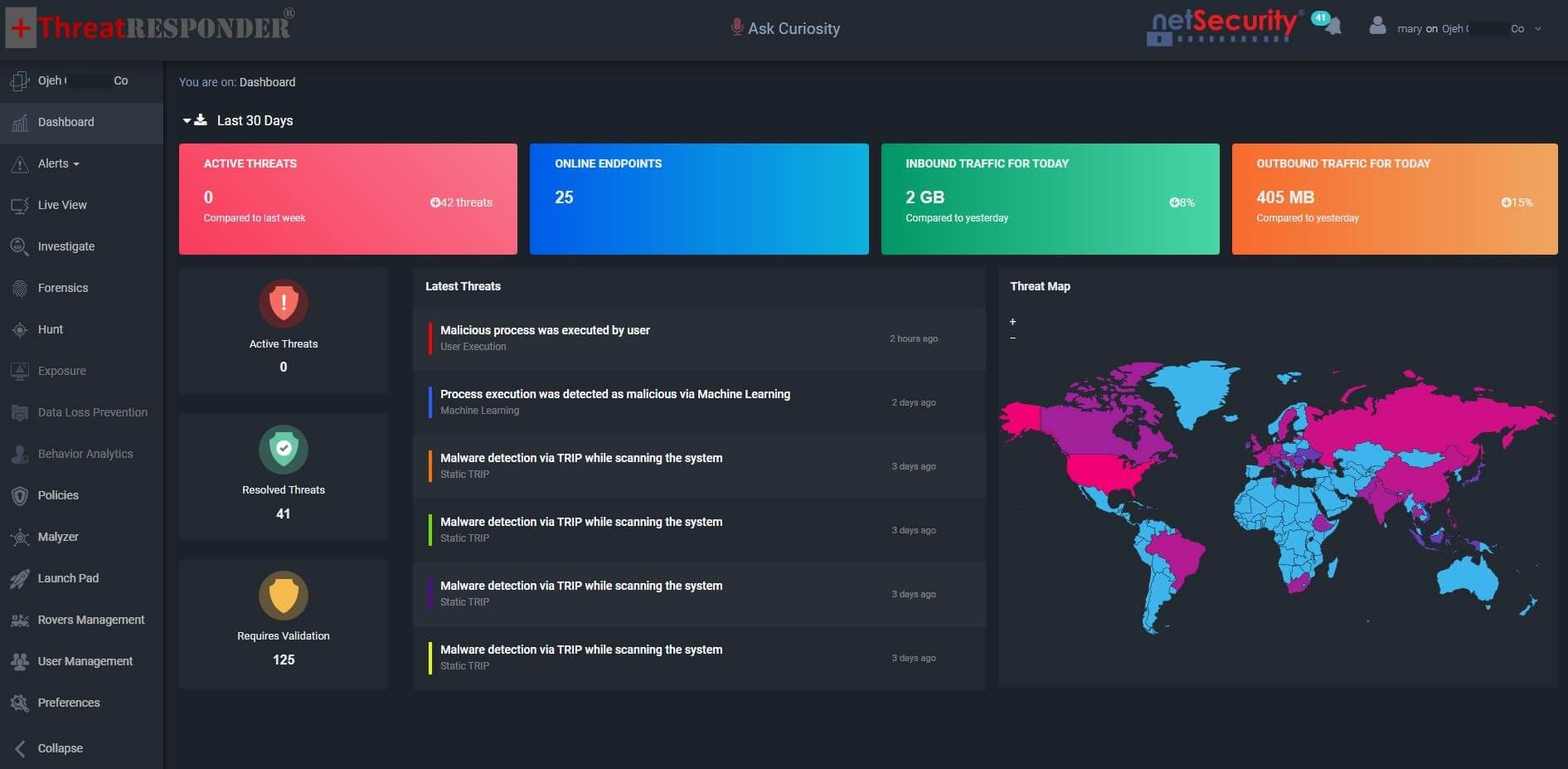
Living off the SaaS succeeds when defenders cannot correlate identity, app grants, and content movement across platforms. ThreatResponder is designed to surface these cross domain campaigns early and provide fast, safe response options.
Unified SaaS threat narratives
ThreatResponder connects identity telemetry, OAuth grants, service principal activity, and content events into a single timeline. Analysts can see how a new grant led to unusual API access and to exfiltration through sharing or exports.
Behavioral detections that matter
ThreatResponder emphasizes sequences rather than isolated events. It highlights suspicious chains such as grant creation followed by first time access to high value repositories, or automation edits followed by outbound webhooks.
Identity centric response at speed
With ThreatResponder, teams can revoke grants and tokens, disable risky apps, quarantine files or shares, enforce step up authentication, and notify resource owners within minutes. Actions are tracked for audit and can be reversed safely if needed.
Lower analyst load, higher certainty
By turning fragmented SaaS signals into prioritized threats with clear context, ThreatResponder helps security teams act decisively before quiet data loss becomes a headline.
Living off the SaaS is not a niche technique. It is the default path for modern attackers who want to blend in, move quietly, and exfiltrate what matters without tripping old alarms. Organizations that treat SaaS as a first class attack surface, govern consent precisely, baseline behavior, and respond at the identity and app layers will catch these campaigns early. The rest will keep looking for malware while their data walks out the front door through everyday productivity features.
Disclaimer
The page’s content shall be deemed proprietary and privileged information of NETSECURITY CORPORATION. It shall be noted that NETSECURITY CORPORATION copyrights the contents of this page. Any violation/misuse/unauthorized use of this content “as is” or “modified” shall be considered illegal and subjected to articles and provisions that have been stipulated in the General Data Protection Regulation (GDPR) and Personal Data Protection Law (PDPL).