Iran’s Cyber Retaliation Doctrine: What CISOs Must Prepare for During Geopolitical Escalation
Iran’s approach to cyber operations is not random, purely criminal, or limited to espionage. It is a doctrine shaped by asymmetric power projection, plausible deniability, and calibrated signaling during geopolitical escalation. For CISOs, the practical takeaway is simple: when tensions rise, your organization can become a pressure point even if you have no direct role in the conflict.
Iran-aligned cyber activity frequently follows predictable strategic goals. It aims to impose cost, create uncertainty, gather leverage, and influence public perception. Sometimes the objective is disruption through wipers or ransomware-like operations. Sometimes it is quiet access that can be activated later. In many cases, it is a blend of espionage and sabotage, with the operator prepared to pivot from stealth to impact depending on the external situation.
This doctrine creates a recurring risk pattern for enterprises and critical infrastructure, especially those with regional exposure, supply chain ties, or symbolic value. CISOs should plan for cyber retaliation waves that may target third parties, managed service providers, OT environments, and internet-facing systems, not just the “obvious” geopolitical entities.
How Iran operationalizes escalation in cyberspace
Retaliation is often delayed, distributed, and deniable
Iranian operators often avoid immediate, obvious retaliation. Instead, they distribute activity across multiple fronts: hacktivist branding, front groups, and long-running APT access. This lets them shape narrative and outcomes while maintaining flexibility. The same campaign may contain low-sophistication disruption as cover for higher-value exploitation elsewhere.
Cyber operations are designed to be reversible until they are not
A common pattern is to establish access, harvest credentials, stage tools, and map the environment. Impact is optional until leadership decides it is useful. This means your indicators of compromise may appear “minor” at first: a single compromised account, an unusual PowerShell chain, or a new scheduled task. In an escalation window, those small signals deserve immediate investigation.
Target selection is strategic, not always tactical
Iran’s doctrine prioritizes targets that generate leverage. That can include:
- Critical infrastructure and municipal services that erode public trust
- Energy, industrials, shipping, and logistics that affect national resilience
- Healthcare and public sector services that create social pressure
- Defense industrial base and dual-use manufacturing that affects capability
- Media, think tanks, and academia that influence narratives
- Managed service providers and SaaS identity surfaces that offer scale
Cyber threats from Iran that CISOs should track
Below are notable Iran-linked or Iran-aligned clusters and branded fronts that appear frequently in threat reporting and incident response. Names and tracking can vary by vendor, but the operational patterns are what matter.
MuddyWater (also known as Mercury)
MuddyWater is commonly associated with Iran-aligned intelligence tasking and is widely observed targeting government, telecom, defense, energy, financial services, and organizations across the Middle East, Europe, and beyond.
Key operational focus:
- Espionage-first access with repeatable enterprise intrusion playbooks
- Long-term footholds for collection, lateral movement, and optional disruption
- Credential theft and abuse of legitimate admin tooling to blend in
Common tactics, techniques, and procedures:
- Spear phishing with weaponized documents or links to credential harvesting
- Abuse of remote management tooling and living-off-the-land binaries
- PowerShell-heavy execution chains and scripted reconnaissance
- Persistence via scheduled tasks, services, registry run keys, and web shells
- Lateral movement using stolen credentials, RDP, SMB, and remote services
- Data staging and exfiltration from file shares and mailboxes
What they try to target strategically and why: MuddyWater tends to pursue access that can produce intelligence value and leverage. They favor environments where a single compromised identity can expose sensitive communications, contracts, operational planning, or partner networks. During escalation, these footholds can be repurposed for coercion, doxxing, or disruptive actions.
Targeted attacks by MuddyWater are often characterized by careful internal discovery, selective data theft, and repeated re-entry attempts using harvested credentials. The risk to CISOs is not only initial compromise, but persistence that survives “cleanup” unless identity and endpoint telemetry are fully validated.
APT34 (commonly tracked as OilRig)
OilRig is often associated with strategic espionage against government, energy, telecom, and organizations that hold policy or operational insights.
Key operational focus:
- Credential-centric intrusion with emphasis on email and identity systems
- Collection of sensitive communications and operational documents
- Regional and sector-based targeting tied to national interest
Common tactics, techniques, and procedures:
- Password spraying and credential stuffing against O365 and VPN portals
- Phishing for cloud credentials and MFA fatigue style social engineering
- Web shells in on-prem environments where exposed web apps exist
- Abuse of OAuth app consent and mailbox rules for persistence
- Internal discovery focused on directory services and email infrastructure
What they try to target strategically and why: OilRig’s strategic value is often in email, identity, and policy communications. If your executives, legal teams, public affairs, or government-facing business units rely heavily on cloud email, you are in scope even if your core business is not geopolitical.
APT35 (commonly tracked as Charming Kitten)
Charming Kitten is frequently associated with social engineering and account takeover operations that can blend espionage, influence, and harassment.
Key operational focus:
- Human targeting of high-value individuals and trust relationships
- Credential harvesting, session hijacking, and account takeover
- Collection of sensitive files, contacts, and communications
Common tactics, techniques, and procedures:
- Highly tailored phishing with fake login pages and lookalike domains
- Use of social platforms, messaging apps, and long-running personas
- Targeting personal email and consumer services to pivot into enterprise
- Exploitation of weak MFA enrollment processes and recovery workflows
What they try to target strategically and why: These operations frequently aim at decision makers, researchers, journalists, dissidents, and executives, because the downstream impact of a single compromised identity can be outsized. CISOs should treat executive protection, identity hardening, and brand monitoring as core controls, not optional add-ons.
APT42 (Iran-aligned enterprise credential theft and surveillance)
APT42 is often described as combining spear phishing and surveillance tradecraft with persistent credential theft.
Key operational focus:
- Collection from government, NGOs, and organizations with regional influence
- Persistent access via credentials rather than noisy malware
- Tracking and monitoring of targets through cloud services
Common tactics, techniques, and procedures:
- Credential phishing and token theft attempts
- MFA bypass attempts using social engineering and session capture
- Use of compromised accounts to send internal phishing and expand access
- Data collection from mailboxes, cloud drives, and collaboration platforms
What they try to target strategically and why: APT42-like operations are dangerous because they can look like routine account misuse. During escalation, a single compromised inbox can become a launch pad for internal fraud, supply chain compromise, or narrative manipulation.
CyberAv3ngers (IRGC-aligned branding associated with OT targeting)
CyberAv3ngers is a name associated with threats and public warnings that have included critical infrastructure rhetoric and operational activity aligned with OT exploitation narratives.
Key operational focus:
- Operational technology exposure, particularly internet-facing devices
- Psychological pressure through public “warnings” and defacement narratives
- Opportunistic targeting of weakly secured industrial endpoints
Common tactics, techniques, and procedures:
- Scanning for exposed OT/IIoT assets and weak remote access paths
- Password guessing against device management interfaces
- Targeting PLC ecosystems and industrial control product footprints
- Leveraging misconfigurations, default credentials, and outdated firmware
What they try to target strategically and why: OT is where disruption creates visible outcomes. Even limited interference can cause safety concerns, service outages, boil-water advisories, or production losses. It also amplifies media impact. That makes OT and PLC surfaces a favored pressure lever during geopolitical spikes.
CISOs should assume that OT exposure, even in small subsidiaries or remote sites, can be targeted as a message. This aligns closely with repeated public warnings attributed to CyberAv3ngers-style branding that attempt to intimidate operators and create urgency through fear.
Handala (also tracked in some reporting as Handala Hack)
Handala is frequently presented as a hacktivist-style brand with operations that can include data leaks, disruption, and occasional wiper-like behavior, sometimes framed as retaliation tied to regional conflict narratives.
Key operational focus:
- Disruption, data exposure, and psychological operations
- Targeting organizations with symbolic value or perceived alignment
- Rapid, high-visibility operations that create headlines and uncertainty
Common tactics, techniques, and procedures:
- Defacements, data leaks, and aggressive public claims of access
- Use of stolen credentials and exploitation of exposed web services
- Wiper-style destructive behavior in some reported incidents
- Opportunistic targeting of vendors and downstream customers
What they try to target strategically and why: Handala-style activity often aims for publicity and coercive effect. Targets can include healthcare, local government, logistics, and enterprises with recognizable brands. The strategic value is messaging: demonstrating reach, causing embarrassment, and forcing defensive spend.
The “Stryker wipe out” incident frequently cited in threat intel discussions is an example of how these campaigns can blend disruption with intimidation. The operational lesson for CISOs is to treat hacktivist branding as potentially intertwined with more capable access and to prepare for destructive outcomes even when the initial intrusion looks like routine ransomware or vandalism.
What OT and PLC risk looks like during escalation
Why OT is uniquely attractive in Iran’s doctrine
OT environments amplify impact. A small change can trigger real-world operational disruption, safety risks, and regulatory scrutiny. Iran-aligned operators and branded fronts have repeatedly signaled interest in water, energy, manufacturing, and building systems. Even when deep engineering manipulation is not achieved, operators can still generate disruption by:
- Locking operators out of management interfaces
- Disabling remote monitoring
- Disrupting historian and HMI availability
- Tampering with configuration backups
- Leveraging ransomware tactics against OT-adjacent Windows estates
What CISOs should take from recent U.S. government warnings
CISA advisories in this space have repeatedly emphasized a consistent theme: exposed industrial devices, weak credentials, and poor segmentation turn opportunistic scanning into real incidents. The practical message is that many OT compromises are not “zero-day magic.” They are hygiene failures: default passwords, open management ports, outdated firmware, and shared credentials across sites.
For CISOs, the right approach is not panic. It is disciplined exposure management and separation of duties between IT identity systems and OT operations. If your OT visibility is limited, assume that adversaries can see more than you can and close the gap quickly.
A CISO playbook for Iran-linked retaliation waves
Shift from incident response to escalation readiness
During geopolitical escalation, your response posture should assume higher tempo and higher blast radius. Implement an escalation mode that includes:
- 24/7 triage staffing plan and an executive escalation tree
- Accelerated patching for internet-facing systems and VPN appliances
- Temporary tightening of conditional access and MFA policies
- Increased alert sensitivity for identity anomalies and remote access
Harden identity first because it is the shortest path to impact
Iran-aligned actors often win through credentials and persistence, not exotic malware. Prioritize:
- Phishing-resistant MFA for admins and executives
- Conditional access with device compliance and geo-risk rules
- Disable legacy auth and monitor impossible travel and token anomalies
- Reduce standing privileges using JIT and PAM controls
- Block risky OAuth app consent and review enterprise app permissions
Protect email and collaboration workflows from silent persistence
Email rules, forwarding, and OAuth persistence can outlast endpoint cleanup. Add controls such as:
- Alerts on mailbox forwarding, suspicious inbox rules, and delegation changes
- Monitoring for mass download activity from cloud drives
- DLP guardrails for sensitive contract and engineering data
- Quarantine policies for external file sharing during escalation windows
Prepare for wipers and destructive outcomes, not only ransomware
Destruction is a credible risk in retaliation doctrine. A wiper does not negotiate, and backups can be targeted. Strengthen:
- Immutable backups and offline copies for critical systems
- Recovery drills that validate bare-metal restore and identity restore
- Segmented backup credentials with separate admin planes
- Golden images and rapid rebuild pipelines for endpoints and servers
- Logging retention that survives destructive events
OT and PLC controls that matter most in the first 30 days
If you have OT footprint, focus on high-return steps:
- Eliminate direct internet exposure of PLCs, HMIs, and gateways
- Enforce unique credentials and remove default passwords everywhere
- Segment OT from IT with strict allow lists and monitored jump hosts
- Monitor for new remote access services and unusual protocol usage
- Patch and update firmware based on exposure and criticality
- Ensure safety systems and manual operations procedures are tested
Expect third-party and supply chain compromise
Iran-linked campaigns may target MSPs, vendors, and smaller partners to reach larger networks. Reduce this risk by:
- Requiring MFA and least privilege for all vendor access
- Time-bound vendor accounts and monitored privileged sessions
- Network segmentation for vendor tools and remote support channels
- Contractual incident notification timelines and security baselines
- Continuous monitoring of vendor access patterns and data movement
Indicators and early warning signals CISOs should not ignore
Even without confirmed attribution, the following patterns should trigger escalation-mode response:
- Sudden increase in password spraying against cloud identities
- MFA push fatigue attempts against executives and admins
- New OAuth app consent requests and suspicious enterprise apps
- PowerShell chains launched from Office documents or WMI
- Creation of scheduled tasks and new services on file servers
- Unusual RDP activity or remote management tool installation
- Discovery commands and directory enumeration from non-admin hosts
- OT network scans or traffic spikes to PLC management interfaces
Communicating risk to leadership without creating panic
CISOs should frame Iran-linked retaliation risk as a readiness exercise, not a prediction of doom. Use business language:
- “We are tightening identity and remote access because threat activity rises during geopolitical events.”
- “We are validating recovery because destructive attacks are designed to deny operations, not extort.”
- “We are reducing OT exposure because disruption can be achieved through basic access failures.”
Provide a short, measurable dashboard for executives:
- Internet-facing asset count and patch status
- MFA coverage and phishing-resistant adoption rate
- Backup immutability coverage and restore test results
- OT remote access exposure and segmentation milestones
- Mean time to detect and mean time to contain for identity incidents
The bottom line for CISOs
Iran’s cyber retaliation doctrine is built for moments of geopolitical escalation. It blends espionage, disruption, and influence with deniable fronts and opportunistic OT targeting. The most successful defenses are not exotic. They are rigorous identity hardening, exposure reduction, resilient recovery, and OT segmentation that assumes adversaries will look for the fastest path to visible impact.
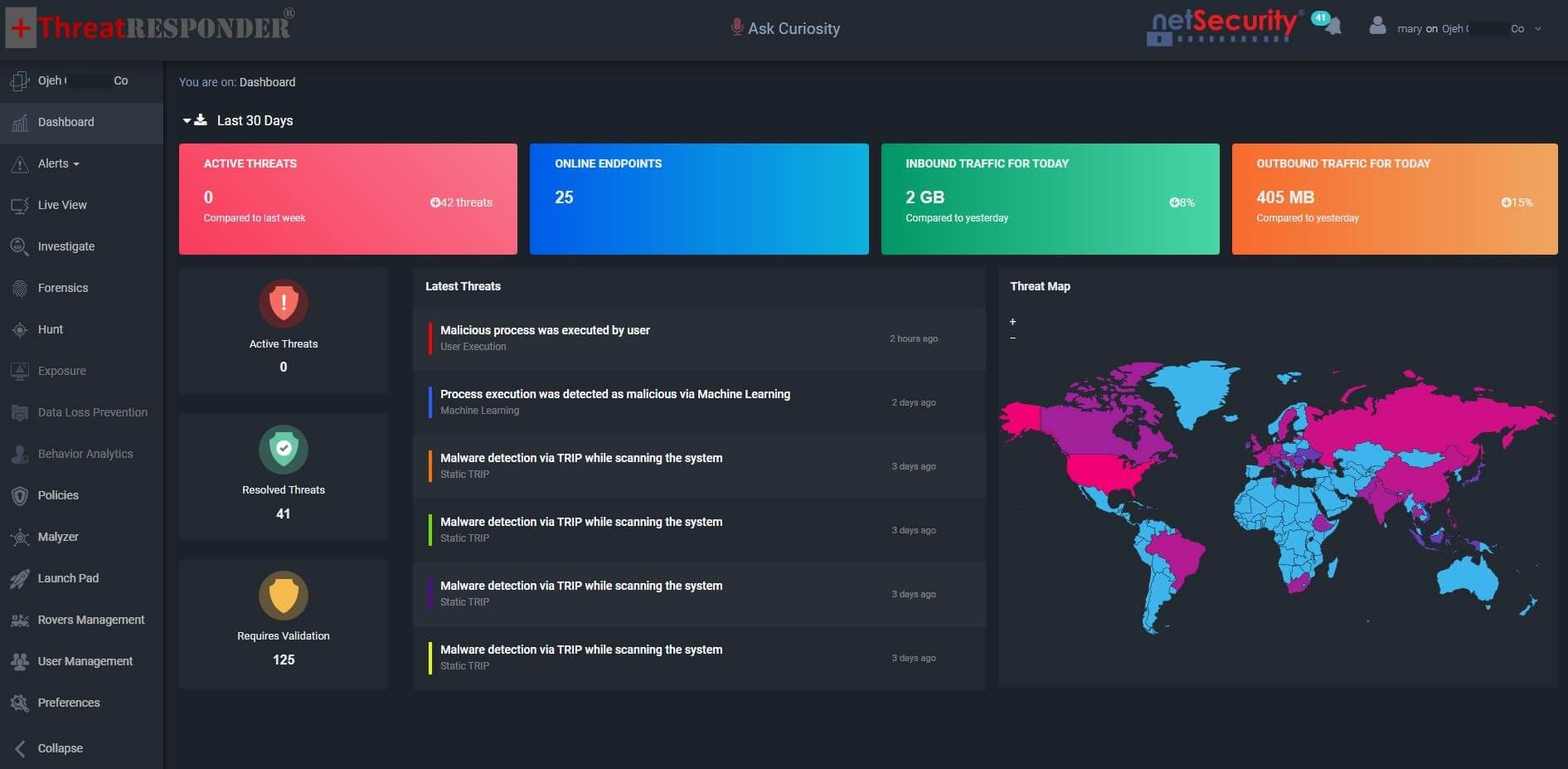
When you need to move from planning to action quickly, NetSecurity’s ThreatResponder helps operationalize escalation readiness through rapid triage, threat hunting, identity and endpoint validation, OT-aware incident handling, and recovery-focused containment designed for wiper and disruption scenarios. If geopolitical tension is rising, ThreatResponder gives CISOs the speed, structure, and hands-on expertise to stay ahead of the next retaliation wave.
Disclaimer
The page’s content shall be deemed proprietary and privileged information of NETSECURITY CORPORATION. It shall be noted that NETSECURITY CORPORATION copyrights the contents of this page. Any violation/misuse/unauthorized use of this content “as is” or “modified” shall be considered illegal and subjected to articles and provisions that have been stipulated in the General Data Protection Regulation (GDPR) and Personal Data Protection Law (PDPL).