How Attackers Are Using Vulnerable Legitimate Software as Bait in Social Engineering Attacks
Threat actors are increasingly abusing the implicit trust users and organizations place in legitimate, digitally signed software. Instead of delivering obviously malicious binaries, attackers now rely on well known applications such as PDF tools, remote access software, and IT administration utilities as the initial lure. Social engineering convinces victims to install or execute these programs, after which attackers exploit weaknesses in how the software loads dependencies, handles updates, or accepts configuration data. This strategy allows adversaries to bypass both user suspicion and traditional security controls, achieving reliable initial access with minimal friction.
Why Legitimate Software Is an Effective Social Engineering Lure
Users are trained to distrust unknown files but are equally trained to trust familiar brands and signed executables. Many security programs reinforce this behavior by emphasizing digital signatures and publisher reputation. Attackers exploit this trust gap by embedding malicious components alongside legitimate applications or by modifying installers without breaking the digital signature. Because the visible software is genuine, victims rarely question execution, and security tools may initially classify the activity as low risk. By the time malicious behavior emerges, the attacker is already operating from inside a trusted process context.
PDFSider as a Recent Example of Trusted Software Abuse
The PDFSider campaign highlights how effective this approach has become against even mature enterprises. In this incident, attackers delivered a legitimate, digitally signed PDF utility to the victim through targeted social engineering. The software itself was not malicious, but it was bundled with a crafted dynamic link library designed to be loaded automatically when the application executed. This technique, commonly known as DLL side loading, allowed attacker controlled code to run under the guise of a trusted PDF application.
Once active, the malicious component did not immediately raise alarms. It operated largely in memory, avoided leaving obvious artifacts on disk, and initiated encrypted command and control communications. In parallel, attackers used additional social engineering techniques, including impersonating internal support staff and attempting to persuade users to enable legitimate remote assistance tools. The objective was not immediate disruption but long term, covert access that could later be monetized through data theft, ransomware deployment, or espionage activity.
Common Attack Patterns Leveraging Legitimate Software
Although PDFSider is a recent example, the same tactic appears across multiple campaigns and industries. Attackers consistently follow a similar pattern that combines deception with technical exploitation.
Trojanized Installers Distributed via Phishing and Malvertising
Popular utilities such as SSH clients, file transfer tools, and compression software are frequently abused. Victims searching for these tools encounter sponsored ads or cloned websites that distribute installers appearing identical to the official versions. The installer may perform its expected function but also drops a malicious payload or exploits a vulnerable loading mechanism to execute attacker code after installation.
Abuse of Signed Remote Access and IT Management Tools
Remote support and management software is particularly attractive to attackers because its legitimate function already includes screen sharing, command execution, and persistence. Adversaries distribute signed installers through phishing emails disguised as invoices, shared documents, or software updates. Once installed, the tool is silently configured to connect back to attacker infrastructure. From a defender’s perspective, it can look indistinguishable from authorized IT support activity unless behavior is closely analyzed.
Exploitation of Vulnerable Dependency Handling
Many legitimate applications load external libraries from their execution directory before checking secure system paths. Attackers exploit this behavior by placing a malicious library with a legitimate name alongside the executable. When the application launches, it inadvertently executes attacker code. Because the parent process is trusted and signed, this activity often bypasses basic allowlisting and reputation based controls.
Why Traditional Defenses Struggle Against These Attacks
Signature based tools focus heavily on whether a file is known to be malicious. In these campaigns, the primary executable is legitimate and often widely deployed. Email gateways and web filters may allow the file because it passes reputation checks. Endpoint tools may initially allow execution because nothing overtly malicious occurs at launch. The true indicators of compromise only appear afterward, in the form of abnormal process behavior, unusual child processes, or unexpected network communications originating from software that normally would not exhibit such activity.
How ThreatResponder Can Prevent Such Attacks
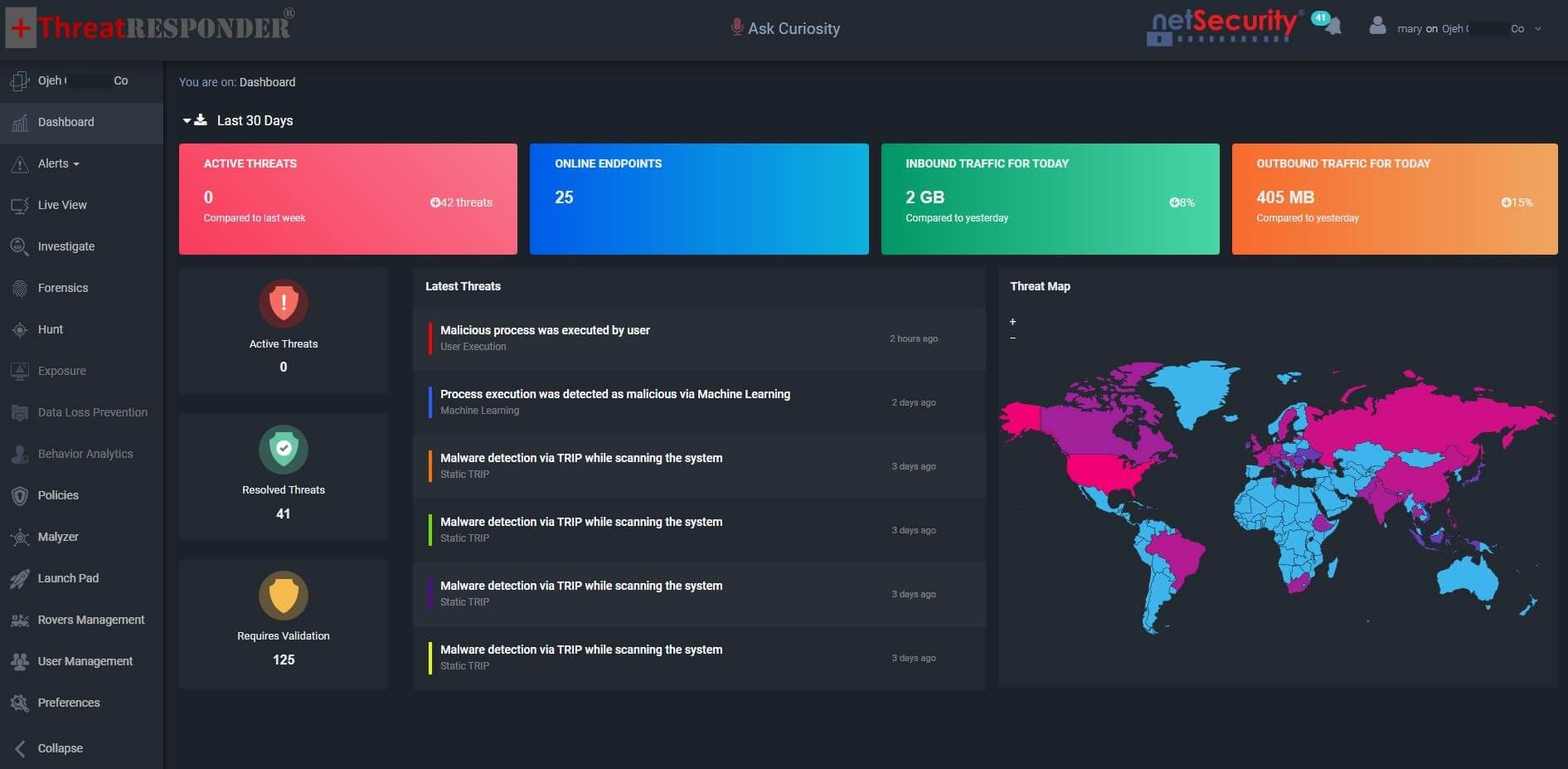
ThreatResponder is designed to address precisely this class of trust abuse by focusing on behavior rather than file reputation alone. Instead of asking whether an executable is signed or popular, it continuously evaluates what the software actually does at runtime.
Behavioral Detection of Side Loading and Execution Abuse
ThreatResponder can detect when a trusted application loads libraries from abnormal locations or exhibits dependency loading patterns inconsistent with its known behavior. This allows early identification of DLL side loading and similar techniques even when the parent process is legitimate.
Monitoring of Suspicious Post Execution Activity
By analyzing process chains, ThreatResponder can identify when benign applications suddenly spawn hidden shells, scripting engines, or system utilities. The creation of scheduled tasks, services, or persistence mechanisms immediately after the first run of a PDF tool or admin utility is flagged as highly suspicious and can be blocked or contained automatically.
Process to Network Correlation
ThreatResponder correlates endpoint behavior with network activity. If a document viewer, screenshot tool, or remote support installer begins making encrypted outbound connections to uncommon destinations or communicating at unusual intervals, these anomalies are detected regardless of the application’s signature or reputation.
Rapid Containment and Automated Response
Once malicious behavior is identified, ThreatResponder enables immediate containment actions such as isolating the endpoint, terminating the abused process tree, and quarantining malicious dependencies. This reduces dwell time and prevents lateral movement while giving security teams the context needed to understand how the attack began and where it may have propagated.
By focusing on how attackers abuse trust rather than simply whether a file appears legitimate, ThreatResponder closes one of the most critical gaps in modern endpoint defense and stops attackers who rely on vulnerable legitimate software as their entry point.
Disclaimer
The page’s content shall be deemed proprietary and privileged information of NETSECURITY CORPORATION. It shall be noted that NETSECURITY CORPORATION copyrights the contents of this page. Any violation/misuse/unauthorized use of this content “as is” or “modified” shall be considered illegal and subjected to articles and provisions that have been stipulated in the General Data Protection Regulation (GDPR) and Personal Data Protection Law (PDPL).