Critical Infrastructure as a Messaging Target: What Disruption Campaigns Really Aim to Do
Critical infrastructure cybersecurity is no longer only about preventing financial loss. It is about protecting trust, continuity, and public confidence. In today’s threat landscape, disruption campaigns increasingly target critical services not because they hold the highest monetary value, but because they deliver the highest visibility. Attackers choose impact that people can feel, talk about, and fear. A delayed train, a water advisory, a hospital diversion, or a regional outage can generate more headlines than a stolen database. That attention is the point.
For CISOs, resilience leaders, and security teams supporting essential services, this shift changes how risk should be evaluated. Traditional models focus on assets, data, and downtime costs. Disruption campaigns add another variable: messaging value. The operational goal may be to signal capability, embarrass leadership, trigger public anxiety, or demonstrate reach during a tense moment. The adversary may not even need to fully compromise core control systems. It can be enough to disrupt operations through adjacent IT environments, remote access points, third-party dependencies, or public-facing services.
This blog breaks down what disruption campaigns really aim to do, why critical infrastructure is uniquely attractive, what tactics are most common, and how to build resilience that holds under pressure.
Why attackers choose visibility over value
Disruption is a form of influence
Disruption is persuasive in a way that data theft is not. When people experience service instability, confidence drops quickly. That loss of trust can translate into political pressure, regulatory reaction, market uncertainty, and reputational damage. Attackers understand that a public-facing interruption can shape decision-making far beyond the technical event. This is why disruption campaigns often align with moments of heightened attention, such as geopolitical tension, public events, labor disruptions, or high-profile incidents.
Visibility creates amplification. News cycles, social media, and community channels spread the story faster than an organization can deliver context. Even a limited outage can be framed as “system compromised” or “critical services unsafe,” which forces organizations to spend time and energy on narrative control while responding operationally.
Messaging targets have predictable characteristics
Attackers typically choose targets that offer at least one of these advantages:
- High public dependence: daily life is affected quickly
- High regulatory sensitivity: scrutiny and reporting requirements intensify the response burden
- High complexity: recovery is slow and uncertainty persists
- High interconnectedness: downstream impacts multiply
- High symbolic value: the target represents authority, stability, or national capability
This is why disruption campaigns repeatedly focus on water utilities, power distribution, transportation networks, healthcare delivery, emergency services, and municipal operations. The business value of these organizations may be modest compared to global enterprises, but the messaging value is enormous.
Uncertainty is the multiplier
The most effective disruption campaigns create doubt about what is safe and what is true. In critical infrastructure, uncertainty has real-world consequences. People change behavior. Businesses pause operations. Operators become cautious. Leaders overcorrect. Attackers can exploit this by combining operational disruption with public claims, leaks, or warnings. In many cases, the technical impact is less important than the confusion that follows.
What disruption campaigns are trying to achieve
Strategic signaling and deterrence
Some disruption campaigns are designed to demonstrate capability. The message is “we can reach you” or “we can impose cost.” This can be used to deter action, extract concessions, or influence negotiations. The attacker may intentionally avoid catastrophic outcomes while still proving access and control. From the defender’s perspective, these events can look like incomplete attacks or failed intrusions, when in reality they are calibrated demonstrations.
Psychological pressure and erosion of trust
Critical services are trust-based. People assume water is safe, power is stable, hospitals are available, and transit is dependable. Disruption undermines that assumption. Once trust is damaged, it takes sustained reliability to restore. Attackers may seek long-term reputational harm rather than a single outage. They may also aim to create internal distrust, such as tension between IT and OT teams, public blame, or leadership friction.
Operational cost and resource exhaustion
Even short disruptions can trigger expensive incident response, overtime, emergency procurement, audit requirements, and regulatory engagement. Attackers know that every hour spent in crisis mode drains budgets and attention. This is especially damaging to mid-market critical operators who have limited staffing depth. Resource exhaustion is a strategy, not a side effect.
Testing, learning, and establishing footholds
Not every disruption attempt is the main event. Some are reconnaissance disguised as nuisance. Attackers probe for weak remote access paths, poorly segmented networks, and fragile recovery workflows. They learn how quickly defenders respond and what controls are in place. These lessons can be reused later, by the same adversary or by copycats.
Narrative operations and recruitment
Public disruption claims are sometimes paired with brand-building by adversary groups. Whether the claims are fully accurate or inflated, the public performance can attract followers, intimidate targets, and recruit affiliates. This makes critical infrastructure attractive because it produces attention and perceived legitimacy.
Why critical infrastructure is uniquely exposed
Complex environments and long asset lifecycles
Critical operators often run mixed environments: modern cloud services, legacy servers, specialized applications, and OT systems built for reliability rather than security. Long asset lifecycles mean outdated operating systems, unpatchable devices, and vendor-dependent updates. This complexity creates gaps that disruption campaigns exploit.
IT and OT convergence expands attack paths
As organizations integrate OT visibility, remote operations, and centralized identity, the boundaries between IT and OT become porous. Attackers do not need to “hack a PLC” to cause operational harm. They can compromise:
- Identity systems used for remote access
- Engineering workstations and jump servers
- Historian servers and reporting platforms
- Remote monitoring and maintenance tools
- Ticketing and dispatch systems that drive operations
Disruption often starts in IT, then cascades into operational downtime because OT depends on IT for scheduling, access, telemetry, and support.
Third-party dependencies create systemic risk
Critical infrastructure relies on vendors for SCADA support, managed services, billing platforms, customer portals, and specialized hardware maintenance. A disruption campaign can target a supplier to impact many operators at once. Even when core operations remain intact, upstream failures can cause service degradation and public confusion.
Common disruption campaign techniques that create visible impact
Denial of service and internet-facing disruption
DDoS attacks remain a common tool for creating quick, public-facing impact. Customer portals, payment systems, and public communications channels are frequent targets. This can trigger secondary effects, including call center overload, billing delays, and public frustration. Even if operations are unaffected, the perception of outage can spread rapidly.
Ransomware that aims for downtime, not negotiation
In many critical sectors, downtime costs more than ransom demands. Attackers exploit this reality. They target IT systems that support operations, then pressure the organization by threatening prolonged disruption. Even without touching OT, ransomware can interrupt scheduling, diagnostics, reporting, and procurement.
Wipers and destructive actions
Some campaigns are not designed for payment. Wipers and destructive actions aim to delay recovery and maximize uncertainty. The hallmark is irreversible damage to endpoints, servers, or backups. When destructive intent is present, the defender’s priority shifts from negotiation to containment, restoration integrity, and business continuity under degraded conditions.
Credential-led intrusions and identity abuse
Identity is the fastest route to disruption. Attackers can use stolen credentials to:
- Disable security controls
- Push configuration changes
- Delete or encrypt virtual machines
- Modify network access rules
- Disrupt remote access services
- Impair monitoring and alerting
In critical infrastructure, identity compromise can also affect vendor access paths and remote maintenance workflows, increasing operational risk.
OT-adjacent attacks that degrade control and visibility
Many disruption campaigns target OT-adjacent components rather than core controllers. Common outcomes include:
- Loss of HMI visibility for operators
- Disrupted historian data, affecting process confidence
- Disabled alarms and notifications
- Interference with remote telemetry
- Forced shift to manual operations, slowing throughput
The operational objective is often to reduce confidence and increase operator workload, not necessarily to cause unsafe states.
Data leaks and public pressure
Some disruption campaigns combine outage with data theft and public release. The leak is used to extend the news cycle and apply ongoing pressure. In critical infrastructure, leaks can include network diagrams, vendor contacts, procedures, and internal communications. Even when the leaked data is not deeply sensitive, it can be framed as a major compromise, amplifying reputational harm.
How to build resilience against disruption campaigns
Prioritize exposure reduction over perfection
Resilience begins by shrinking the attack surface. Focus on what adversaries can reach quickly:
- Internet-facing systems, VPNs, and remote access portals
- Cloud identity endpoints and authentication flows
- Vendor access channels and shared tools
- Public web infrastructure and DNS hygiene
A realistic goal is rapid risk reduction, not total elimination. The faster you reduce external exposure, the less likely you become an opportunistic messaging target.
Harden identity as the core resilience control
Identity hardening is often the highest-return action for critical infrastructure cybersecurity because it prevents rapid disruption via administrative access. Key moves include:
- Phishing-resistant MFA for administrators and remote access users
- Conditional access policies tied to device health and risk signals
- Removal of legacy authentication paths
- Privileged access management with time-bound elevation
- Alerts for unusual OAuth consent, inbox rules, and impossible travel patterns
If an attacker cannot reliably gain or retain privileged access, disruption becomes harder to execute at scale.
Segment for safety, not just compliance
Network segmentation must be built around operational outcomes. Ask: “What segmentation prevents a compromise in IT from impacting operations?” Prioritize:
- Strict separation between enterprise IT and OT networks
- Controlled jump hosts with monitored sessions
- Allow-listed communications between zones
- Separate identity planes where feasible for OT management
- Tight control of remote administration tools and protocols
Segmentation should also cover backups, monitoring, and management networks because attackers often target these to delay recovery.
Make recovery a measurable capability
Resilience depends on how quickly and safely you can restore. For disruption campaigns, recovery is the main battlefield. Build a recovery program that includes:
- Immutable backups and offline copies for critical systems
- Separate backup credentials and administration paths
- Regular restore testing with defined time objectives
- Clean rebuild procedures for endpoints and servers
- A plan for identity restoration, not just data restoration
Recovery should be tested under realistic assumptions, including partial visibility, compromised admin accounts, and limited vendor availability.
Prepare communications for uncertainty
Disruption campaigns thrive on confusion. A prepared communications plan reduces panic and preserves trust. Include:
- Pre-approved messaging templates for service disruption scenarios
- Coordination between security, operations, legal, and PR
- A public update cadence that emphasizes transparency and safety
- Clear internal guidance to prevent rumor spread
- A process for handling adversary claims without amplifying them
Communications readiness is a resilience control because it prevents the attacker from owning the narrative.
Monitor for early disruption indicators
Detection should focus on behaviors that precede visible impact:
- Password spraying and repeated authentication failures
- Privilege elevation and new admin assignments
- Changes to firewall rules, VPN configurations, or conditional access
- Unusual remote tool installation and PowerShell execution chains
- Backup deletion attempts, snapshot tampering, and recovery vault changes
- OT network scanning and unexpected protocol usage
The goal is to catch the setup phase before the adversary flips from access to disruption.
What CISOs should do differently during heightened threat periods
Shift into escalation-mode operations
When risk rises, the security program should temporarily operate in a different mode:
- Increase monitoring sensitivity for identity and remote access anomalies
- Accelerate patching for exposed systems and edge services
- Tighten vendor access and require stronger authentication
- Validate backups and perform targeted restore drills
- Run focused threat hunting on key operational support systems
Escalation mode should be a planned switch, not an improvised scramble. Define triggers that activate it, such as geopolitical tension, sector-specific warnings, or active scanning activity against your perimeter.
Validate OT assumptions with operators
CISOs should partner with OT leadership to confirm:
- What systems are truly critical to maintain safe operations
- What manual processes exist if visibility is degraded
- What remote access paths could become single points of failure
- What vendor support dependencies exist during an incident
Resilience is shared ownership. The strongest programs treat OT operators as core stakeholders in cyber readiness.
The bottom line: disruption is the message
Disruption campaigns aim to create visible impact, amplify uncertainty, and shape decisions. Critical infrastructure is targeted because it sits at the intersection of trust, safety, and continuity. Attackers choose visibility over value because visible disruption creates leverage that stolen data often cannot.
If you want to reduce risk, prioritize exposure reduction, identity hardening, segmentation built for operational outcomes, and recovery that is tested under adversarial conditions. Then strengthen communications so the attacker cannot turn uncertainty into lasting damage.
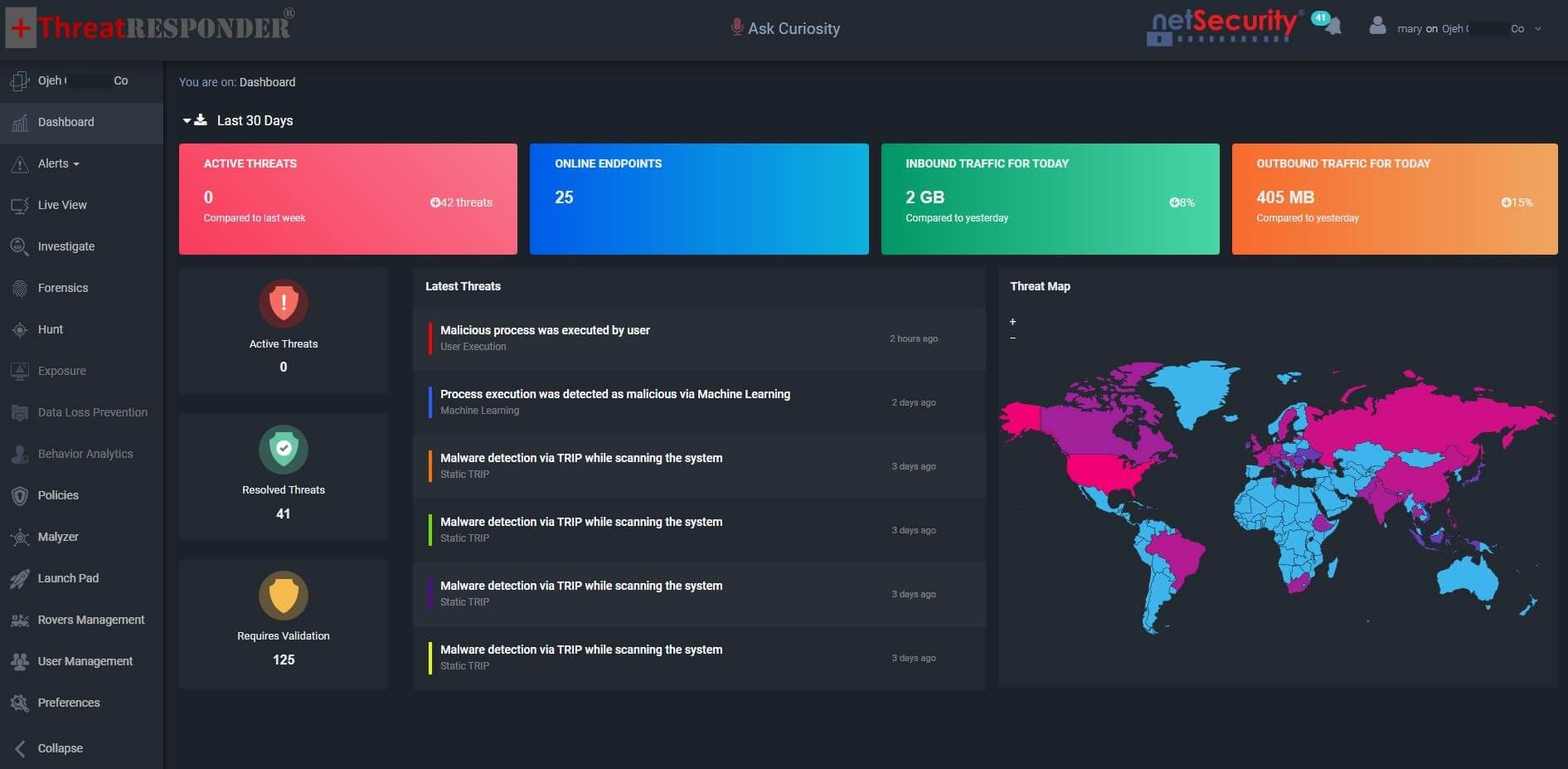
When disruption becomes the objective, speed and structure matter. NetSecurity’s ThreatResponder helps critical infrastructure teams respond with escalation-ready triage, threat hunting, containment, OT-aware decision support, and recovery-first execution designed to restore services safely and quickly when it matters most.
Disclaimer
The page’s content shall be deemed proprietary and privileged information of NETSECURITY CORPORATION. It shall be noted that NETSECURITY CORPORATION copyrights the contents of this page. Any violation/misuse/unauthorized use of this content “as is” or “modified” shall be considered illegal and subjected to articles and provisions that have been stipulated in the General Data Protection Regulation (GDPR) and Personal Data Protection Law (PDPL).