Why Brute Force Attacks Still Work in a World of MFA
For years, multi factor authentication has been positioned as the ultimate defense against brute force attacks. Enable MFA, enforce strong passwords, and the problem goes away. That narrative is comforting, but it is no longer accurate. In 2026, brute force attacks continue to succeed, not because MFA is broken, but because attackers have adapted how, when, and where they apply brute force techniques. Instead of noisy password guessing against public login pages, modern attackers use brute force as a precise identity probing technique that feeds into larger identity driven attack chains.
Brute force did not disappear. It evolved. And in many environments, it still works far more often than security teams expect.
What brute force really looks like in 2026
The term brute force often conjures images of high volume login attempts hammering a single account until lockout triggers. That still happens, but it is no longer the dominant pattern. Modern brute force attacks are quieter, slower, and more targeted. They are designed to avoid rate limits, evade alerts, and blend into normal authentication noise.
Precision over volume
Attackers now focus on specific users, services, and identity systems rather than broad, indiscriminate attacks. They may test a handful of passwords across hundreds of known usernames, or try one or two guesses per account over long periods. This approach, often called password spraying, avoids lockouts and keeps activity below alert thresholds.
Timing as an evasion technique
Brute force attempts frequently occur during off hours, weekends, and holidays when monitoring coverage is lower and response times are slower. Failed logins during these windows often go unnoticed or are deprioritized, allowing attackers to continue probing without interruption.
Distributed infrastructure
Instead of attacking from a single source, attackers distribute attempts across large numbers of IP addresses, cloud providers, and residential proxies. Each source generates minimal activity, making correlation difficult without identity focused analytics.
Why MFA does not automatically stop brute force
MFA is a critical control, but it does not eliminate brute force risk on its own. There are multiple reasons why brute force remains effective even in environments where MFA is deployed.
MFA is not enforced everywhere
Many organizations believe MFA is fully enabled, but in practice it is inconsistently applied. Legacy applications, service accounts, VPNs, APIs, and third party integrations often operate without MFA. Attackers specifically look for these gaps and target them with brute force and password spraying.
MFA protects login, not the session
Even when MFA is enforced, it only protects the authentication event. Once a session is established, MFA is no longer involved. If attackers obtain valid credentials through brute force and the user completes MFA once, the resulting session tokens can be abused, replayed, or hijacked later without additional challenges.
MFA fatigue weakens defenses
Push based MFA methods introduce a human decision point. Attackers exploit this with repeated login attempts that trigger push notifications until a user approves one out of frustration or confusion. Brute force becomes a tool to generate MFA fatigue rather than to guess passwords directly.
Conditional access exceptions create exposure
Temporary exceptions, trusted locations, remembered devices, and helpdesk overrides are often added for convenience. These carve outs weaken MFA enforcement and create opportunities for brute force to succeed quietly.
How brute force fits into modern attack chains
Brute force is rarely the final goal. It is a means to an end. Once attackers achieve a single successful login, the attack accelerates quickly.
Stage 1: Identity probing
Attackers begin by enumerating valid usernames through open sources, data leaks, email patterns, and directory exposures. They then use low noise brute force or password spraying to test which identities are protected by weak credentials or inconsistent MFA.
Stage 2: Initial access
A single successful login is enough. Attackers do not need admin rights at this stage. A basic user account provides visibility into internal tools, SaaS applications, and collaboration platforms.
Stage 3: Privilege discovery and escalation
Once inside, attackers map group memberships, role assignments, and permissions. They look for over privileged accounts, misconfigurations, and paths to higher access. Brute force may be reused against internal services, service accounts, or secondary systems once internal visibility is gained.
Stage 4: Persistence beyond credentials
After initial access, attackers aim to remove their dependence on passwords entirely. They create OAuth grants, register applications, generate API tokens, or add authenticators. At this point, brute force is no longer needed, but it was essential to get through the door.
Stage 5: Lateral movement and impact
With persistent access established, attackers move laterally, access data, sabotage backups, or prepare ransomware or destructive actions. The original brute force attempt may never be linked to the eventual impact if identity telemetry is not correlated end to end.
Why security teams still miss brute force success
Despite years of awareness, brute force attacks continue to slip through detection programs. The reasons are structural, not technical.
Failed logins are treated as noise
Most SOCs are flooded with failed authentication events. To cope, teams raise thresholds, suppress alerts, or ignore failures unless lockouts occur. This allows low and slow brute force to operate undetected.
Successful logins are not correlated with prior failures
When brute force succeeds, the signal is not the failed attempts. The signal is the successful login that follows. Many detection systems treat successful authentication as benign and do not link it back to earlier probing activity.
Identity data is siloed
Authentication logs often live in identity provider consoles, separate from endpoint, network, and SaaS telemetry. Without correlation, analysts lack the context needed to recognize that a login is suspicious even if it technically succeeded.
Brute force blends with legitimate user behavior
Users mistype passwords. Devices retry authentication. Applications generate background login noise. Attackers exploit this ambiguity by keeping activity within plausible ranges.
High risk targets for brute force in 2026
Attackers are selective about where they apply brute force. Certain identities and services are consistently targeted.
VPNs and remote access gateways
External facing VPNs remain a primary target, especially when tied to legacy authentication methods or misconfigured MFA policies.
Cloud identity providers
Public cloud login portals are attractive because a single credential often unlocks access to many services. Attackers test tenant wide username patterns aggressively.
Service accounts and automation identities
Service accounts often have weak passwords, no MFA, and broad permissions. They are ideal brute force targets once discovered.
Administrative and shared accounts
Shared admin accounts and break glass identities are frequently excluded from standard controls. Attackers know this and probe them carefully.
Detection strategies that actually work
Stopping brute force in a modern environment requires a shift from volume based detection to behavior and sequence based analysis.
Correlate failures with success
The most important signal is not how many times authentication failed, but what happened next. A successful login following a pattern of low frequency failures across time, locations, or sources should be treated as high risk.
Monitor login context, not just outcome
Analyze device posture, geolocation shifts, IP reputation, login timing, and application access following authentication. A successful login at 3 AM from a new device that immediately accesses sensitive apps is rarely benign.
Track identity behavior after login
Brute force detection should extend beyond authentication. Look for unusual post login activity such as first time access to admin consoles, rapid group enumeration, or OAuth consent events.
Include service accounts and legacy auth
Ensure detection covers non interactive logins, API authentication, and legacy protocols. Many brute force successes occur outside the modern SSO experience.
Why brute force remains a business risk
Brute force attacks are often dismissed as low sophistication, but their business impact can be severe. They frequently serve as the entry point for major breaches, ransomware incidents, and data theft campaigns.
Because brute force attacks exploit identity weaknesses, they scale well across organizations of all sizes. They are inexpensive for attackers and costly for defenders when they succeed. The reputational damage of a breach that started with basic password guessing is often worse than one involving a sophisticated exploit.
Hardening identity against brute force in practice
Reducing brute force risk requires layered controls that assume attackers will test identity defenses continuously.
Enforce MFA consistently
Audit where MFA is disabled or bypassed. Close gaps in legacy systems, service accounts, and third party integrations. Eliminate unnecessary exceptions and document any remaining ones clearly.
Reduce password reliance
Adopt phishing resistant authentication where possible and limit password based access for high risk roles. However, do not assume this alone solves brute force.
Apply conditional access aggressively
Use context such as device compliance, location, and risk scoring to challenge or block suspicious logins even when credentials are correct.
Lock down service accounts
Rotate service account credentials regularly, limit permissions, and migrate to managed identities or certificate based auth where available.
Monitor identity as a continuous signal
Treat identity activity as a telemetry stream that must be analyzed in real time, not as a static access control check.
Preparing the SOC for modern brute force attacks
Operational readiness matters as much as controls.
Train analysts to think in sequences
Analysts should investigate authentication events as part of a story, not as isolated records. Encourage questions like “what happened before this login” and “what did this identity do next.”
Build playbooks for identity containment
Response actions should include revoking sessions, forcing password resets, invalidating tokens, and temporarily restricting access while investigations proceed.
Measure the right metrics
Track time to detect suspicious successful logins, time to contain compromised identities, and percentage of identity events correlated across systems. These metrics reflect real resilience.
The role of ThreatResponder in stopping brute force driven attacks
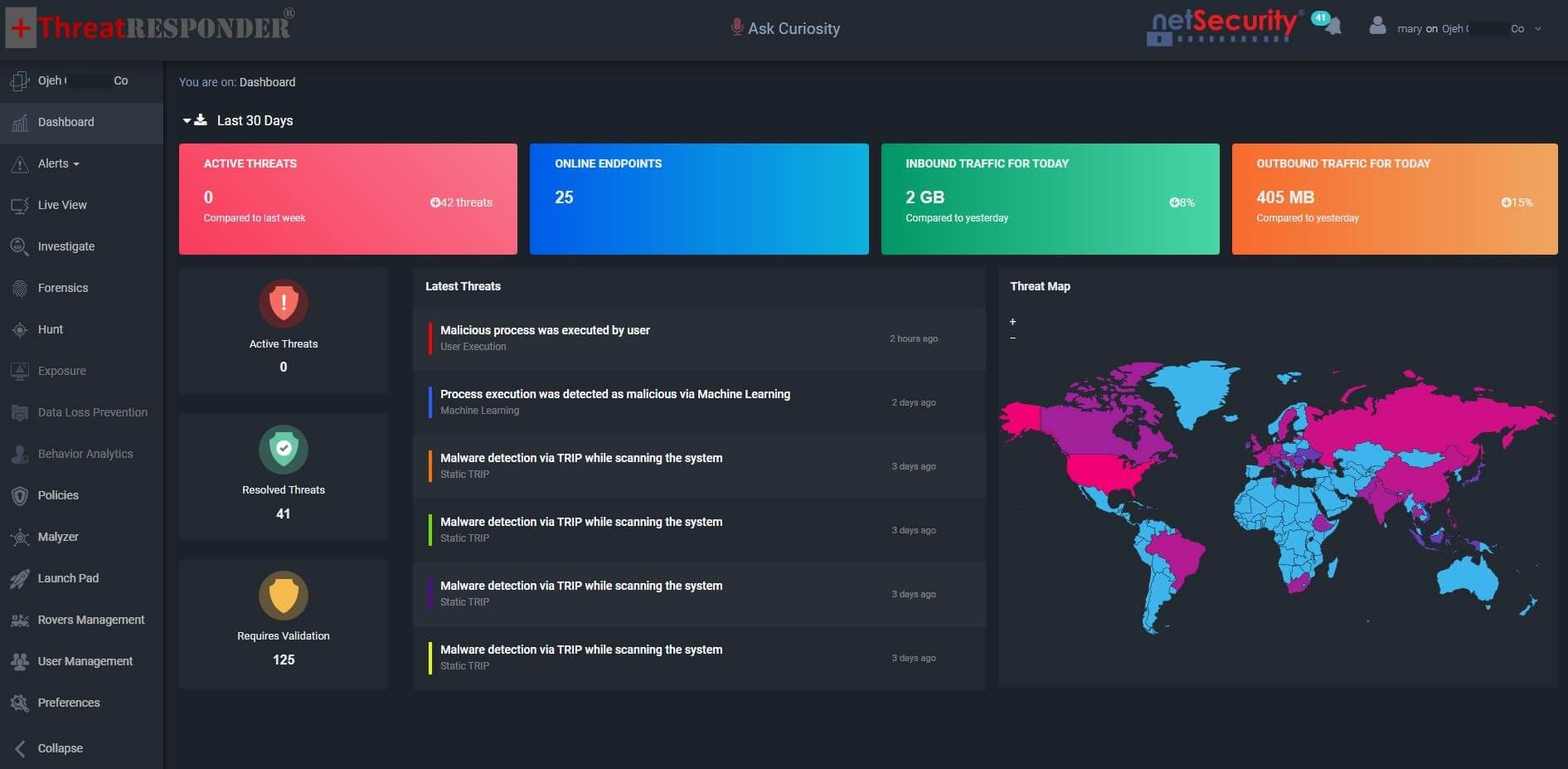
Brute force attacks succeed when identity signals are treated in isolation and successful logins are trusted by default. NetSecurity’s ThreatResponder is built to change that dynamic. ThreatResponder identifies threats in real time by correlating authentication failures, successful logins, session behavior, privilege changes, and post login activity across identity providers, endpoints, cloud platforms, and SaaS applications.
The ITDR module in ThreatResponder is designed specifically to address identity driven attacks that begin with brute force or password spraying. It surfaces suspicious sequences such as low noise login failures followed by successful authentication, unusual access patterns, and rapid escalation behavior. When risk is identified, ThreatResponder enables fast, targeted response actions including session revocation, token invalidation, access restriction, and step up authentication.
In a world full of MFA, brute force still works because identity security does not end at login. ThreatResponder helps organizations see beyond the authentication gate and stop identity attacks before brute force turns into full compromise.
Disclaimer
The page’s content shall be deemed proprietary and privileged information of NETSECURITY CORPORATION. It shall be noted that NETSECURITY CORPORATION copyrights the contents of this page. Any violation/misuse/unauthorized use of this content “as is” or “modified” shall be considered illegal and subjected to articles and provisions that have been stipulated in the General Data Protection Regulation (GDPR) and Personal Data Protection Law (PDPL).